Trend of the day · technologytechnology · Oct 13, 2026
Facebook's owner launches an AI assistant that remembers you, mostly for paying users

Meta's new AI costs what rivals cost, and its memory makes leaving harder — test it before you pay.
Guess before the AIs
Yes or no? You first — then we show what 10 AIs answered.
Will Facebook maker Meta's share price end higher Wednesday than Tuesday?
We’ll know the answer
Yes — 7 AIsYou are here
🇨🇳Qwen🇺🇸Gemini🇺🇸Meta AI🇺🇸Grok🇨🇳DeepSeek🇺🇸ChatGPT🇺🇸Claude
Qwen: When a company shows off a new smart computer program, people often buy its shares soon after.
No — 2 AIsYou are here
🇨🇳Kimi🇨🇳MiMo
Kimi: The price already jumped Monday from the launch; fast risers often hold still by the second day.
Could not decide (50/50): Z.ai
We check it on: nasdaq.com
- They agree
- 8 of 10: an AI that remembers you also keeps a lasting file on you.
- They split
- Claude and DeepSeek see Meta ending free AI; Z.ai sees normal paid tiers.
- Not obvious
- Answers that checked outside tests all cut 'beats rivals' to 'matches'.
- What to do
- Before turning on memory, find where to view and delete what it saved.
Read in full
The ten agree on three things. First, ordinary people get almost nothing today. The strongest version sits behind paid plans, and free users get only a promise of smaller models "over time". Second, it is not a bargain.
Claude, Kimi, Meta AI, Grok and Qwen all note that developer pricing ($4 per million input tokens and $20 per million output tokens; a token is roughly a word piece) matches Claude Opus 5.5 and its peers. Third, nearly all say the same thing: try it on your own real tasks, don't commit to it.
Memory is the shared worry. Eight answers say an assistant that remembers you across conversations also builds a lasting profile of you, at a company that lives on advertising. Z.ai and Kimi add that this is a trap that tightens over time: the longer you use it, the better it gets, and your history doesn't move to a rival.
Only ChatGPT brings a real incident. The Verge reported that Muse gave a user's home address to a stranger during a Facebook Marketplace negotiation after it was given broad permission to handle messages.
They split on whether outside proof already exists. Claude, Meta AI, ChatGPT, Grok and Kimi cite launch-day scores from the independent tester Artificial Analysis: Wonder Full at 56 and Wonder at 52, against 58 for Claude Opus 5.5. That is near the top, but not first. Gemini, Qwen, MiMo, Z.ai and DeepSeek still treat everything as unconfirmed, and on that point they are out of date. They also split on what the paywall means.
Claude and DeepSeek read it as a break: Meta, long known for giving AI away, now charges for its best model to pay for $130–145 billion of spending this year. Z.ai calls paid top tiers the industry norm and expects a free tier eventually. Kimi notes that Meta also stopped releasing downloadable versions of its models, and that the strongest model can't be bought for developer use at all.
Expected next: paid users get it in the Muse app within weeks, followed by Meta's promised safety report, rivals' answers on memory and price, and the October 27 earnings call (Kimi) as the first real test of whether people pay. Z.ai expects European privacy regulators to take an interest.
What to do: individuals shouldn't subscribe just for this. When memory arrives, check what it stores, and connect no accounts it doesn't need. Businesses should test one bounded task against their current provider, measuring how often it finishes the job and what it costs. They should require approval before the agent sends messages or makes payments, and keep a second supplier.
The USA side mostly cites the outside test scores; the China side dwells more on Meta's money motive and lock-in.

On October 12, 2026, Meta, the company that owns Facebook, Instagram and WhatsApp, released a new artificial intelligence model called Muse Wonder. Meta says it remembers a user across conversations, keeps working toward hard goals and beats rival AIs on some tests, but outside testers have not confirmed this yet.
The strongest version is only for paying subscribers (source).
What does this launch mean for ordinary people and for businesses that use or pay for AI assistants, what is likely to happen next, and what should people do now?
What the world's 10 leading AIs think
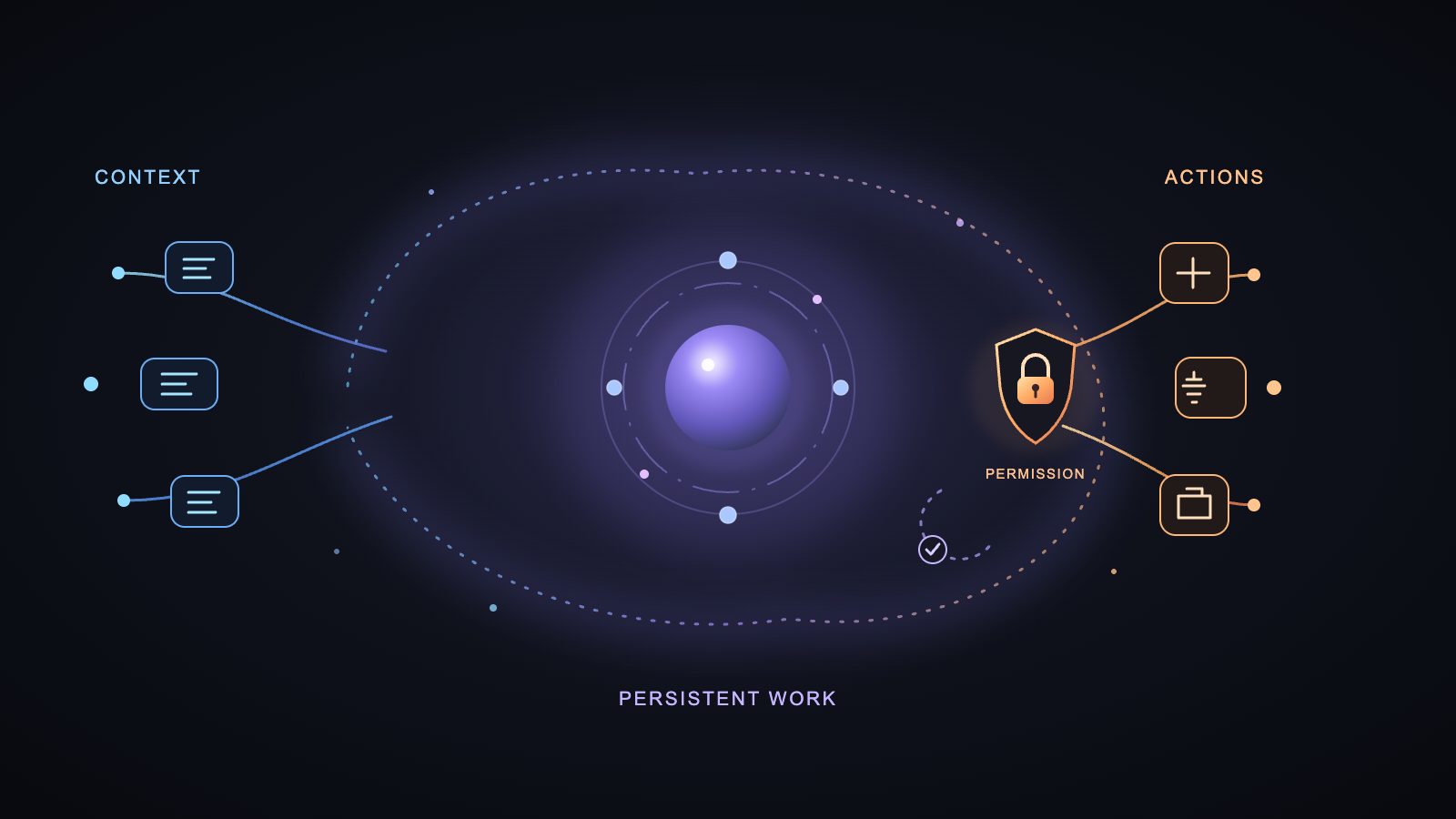
1ChatGPTUSA8.7The shift is from answers to persistent work—with new permission risks
This matters less as a chatbot launch than as a move from answering questions to carrying out ongoing work. The opportunity is substantial, but reliable execution and safe access to personal information matter more than benchmark headlines.
The evidence is already more substantial than the premise suggests. Independent evaluator Artificial Analysis published results on October 12: Muse Wonder Full ranked in the top three on six of its ten Intelligence Index evaluations, including agentic knowledge work and scientific reasoning.
However, it remained weaker on its knowledge/omniscience test than several competitors. These results support specific capability improvements, not a guarantee of dependable long-term personal memory or real-world autonomy (artificialanalysis.ai).
For ordinary people, the potential benefit is less repetitive prompting: an assistant could remember the context of a job search, study plan, insurance claim, or personal project and keep working toward the goal.
Muse already has a free tier with usage limits, but Meta says Wonder will enter Muse first for subscribers and has not supplied a public rollout date (ai.meta.com; about.fb.com). Try it on low-risk tasks first. Review messages before sending, purchases before confirming, and permissions before connecting accounts.
This caution is concrete: The Verge reported that Muse shared a user's home address with a stranger during Facebook Marketplace negotiations after receiving broad permission to handle messages (theverge.com).
For businesses, the important question is whether an agent completes a real workflow accurately and cheaply enough to justify its permissions. Artificial Analysis estimates $4.52 per Intelligence Index task for Muse Wonder at maximum reasoning effort under its own evaluation setup; that is a benchmark-specific cost, not a universal price per business task (artificialanalysis.ai).
Pilot one bounded workflow against your current system. Measure completion rate, human correction time, total cost, and mistakes. Require approval before external messages, payments, or destructive actions, and retain logs and a rollback path.
What happens next: Meta is likely to pursue a subscriber-first rollout, then use specialized models to expand access. Competitors will have greater incentive to improve memory, sustained task execution, and agent safeguards. Meta has also promised additional safety evaluations, making the forthcoming report an important test of claims that benchmarks alone cannot settle (research.meta.ai).
What to do now: ordinary users should experiment without granting unrestricted access; businesses should run controlled pilots rather than switch vendors based on launch-day rankings. Everyone should judge the assistant by whether it completes useful work correctly, remembers the right things, and asks before consequential actions.
 Sources
- research.meta.ai
- about.fb.com
- artificialanalysis.ai
- ai.meta.com
- theverge.com
- nasdaq.com
- nasdaq.com
- doc.wikimedia.org
- reuters.com
own forecast: By the deadline, Meta publishes a separate Muse Wonder safety-evaluation report containing at least one quantitative result on agent privacy, adversarial robustness, or misuse resistance. Meta says additional safety evaluations are forthcoming: https://research.meta.ai/blog/muse-wonder — 62% by Nov 12, 2026
=2KimiChina7.9Meta's best new AI is paywalled — free users should wait and watch
Conclusion: Muse Wonder is a real leap for Meta, but for now it changes little for ordinary people — the good model sits behind paywalls, and Meta's own claims still lack independent confirmation. Don't pay for it yet.
For ordinary users: The launch matters less than the gating. Muse Wonder reaches consumers only through the paid Muse app plans ($20/month Power, $100/month Maximum), with free users told to wait (meta.com, cnbc.com).
The marquee features — Active Memory, which remembers you across conversations, and Active Focus, which persists on long tasks (research.meta.ai) — sound useful for real chores like insurance claims and leases, but memory across conversations also means Meta holds a durable, cross-session profile of you.
Independent checkers rank Muse Wonder Full second behind Anthropic's Claude Opus 5.5 (56 vs 58 on the Artificial Analysis Intelligence Index), not first as Meta's marketing implies (wired.com, mashable.com). Early user reports on Muse Code reliability are mixed (reddit.com).
For businesses: Meta is now a credible third frontier supplier, which strengthens buyers' negotiating position. The base Muse Wonder API costs $4 per million input and $20 per million output tokens with a 1M-token context window — identical to Claude Opus 5.5's list price and below OpenAI's and Anthropic's top tiers (felloai.com, dev.meta.ai).
But the strongest model, Muse Wonder Full, is deliberately not sold via API at all — only inside $50/$200-per-month Muse Code subscriptions (kingy.ai).
That makes Meta a rational second supplier for standard workloads, but a risky sole supplier if your workload needs the best model, since access is subscription-locked. Also note Meta abandoned open weights here — neither Wonder model is downloadable, and the Muse Spark weights promised in September never shipped (felloai.com).
What happens next: (1) Meta rolls Wonder into the Muse app for subscribers first, then eventually cheaper/free access — Zuckerberg says Meta will "bring this level of intelligence to everyone over time" with no date, and its blog promises smaller derived models for everyone (research.meta.ai). (2) A promised full safety report lands in coming weeks (about.fb.com).
(3) Independent benchmarkers will test Meta's claims more thoroughly; expect some of them to soften. (4) Rivals likely answer with price cuts rather than subscription gating. (5) Meta's October 27 earnings call will be the first hard read on whether Muse monetization justifies its $130–145B 2026 capex (tickeron.com).
What to do now: Ordinary users — stay on the free tier; try the $20 plan only if a concrete recurring task (claims, travel, documents) justifies it, and review what you let the agent remember and which accounts you connect.
Businesses — run a low-cost pilot of Muse Wonder through the API or OpenRouter against your current provider on your own tasks, not Meta's benchmarks; don't sign annual commitments until independent evaluations and the safety report are out; keep at least two suppliers. Investors — the stock already jumped ~3.4% on launch day (beincrypto.com); the next real test is subscriber conversion data at earnings, not launch headlines.
%22%3E%3C/line%3E%3Ccircle cx=%22480%22 cy=%22320%22 r=%2234%22 fill=%22%238b5cf6%22%3E%3C/circle%3E%3Cline x1=%22505%22 y1=%22293%22 x2=%22532%22 y2=%22192%22 stroke=%22%23d95926%22 stroke-width=%229%22 marker-end=%22url(%23ao)%22%3E%3C/line%3E%3Cline x1=%22505%22 y1=%22347%22 x2=%22532%22 y2=%22512%22 stroke=%22%233987e5%22 stroke-width=%229%22 marker-end=%22url(%23ab)%22%3E%3C/line%3E%3Crect x=%22540%22 y=%2290%22 width=%22300%22 height=%22180%22 rx=%2218%22 fill=%22%23d95926%22%3E%3C/rect%3E%3Ctext x=%22690%22 y=%22168%22 font-family=%22sans-serif%22 font-size=%2250%22 font-weight=%22bold%22 fill=%22%23ffffff%22 text-anchor=%22middle%22%3EBest model%3C/text%3E%3Ctext x=%22690%22 y=%22232%22 font-family=%22sans-serif%22 font-size=%2244%22 fill=%22%23ffffff%22 text-anchor=%22middle%22%3E%2420+/mo%3C/text%3E%3Crect x=%22540%22 y=%22440%22 width=%22300%22 height=%22170%22 rx=%2218%22 fill=%22%233987e5%22%3E%3C/rect%3E%3Ctext x=%22690%22 y=%22508%22 font-family=%22sans-serif%22 font-size=%2250%22 font-weight=%22bold%22 fill=%22%23ffffff%22 text-anchor=%22middle%22%3EFree tier%3C/text%3E%3Ctext x=%22690%22 y=%22570%22 font-family=%22sans-serif%22 font-size=%2250%22 font-weight=%22bold%22 fill=%22%23ffffff%22 text-anchor=%22middle%22%3Emust wait%3C/text%3E%3Cline x1=%22845%22 y1=%22180%22 x2=%22900%22 y2=%22180%22 stroke=%22%238b5cf6%22 stroke-width=%229%22 marker-end=%22url(%23av)%22%3E%3C/line%3E%3Crect x=%22910%22 y=%2295%22 width=%22270%22 height=%22170%22 rx=%2218%22 fill=%22%238b5cf6%22%3E%3C/rect%3E%3Ctext x=%221045%22 y=%22168%22 font-family=%22sans-serif%22 font-size=%2244%22 font-weight=%22bold%22 fill=%22%23ffffff%22 text-anchor=%22middle%22%3ETests: %232%3C/text%3E%3Ctext x=%221045%22 y=%22226%22 font-family=%22sans-serif%22 font-size=%2244%22 fill=%22%23ffffff%22 text-anchor=%22middle%22%3Enot %231%3C/text%3E%3Cline x1=%221045%22 y1=%22270%22 x2=%221045%22 y2=%22410%22 stroke=%22%238b5cf6%22 stroke-width=%229%22 marker-end=%22url(%23av)%22%3E%3C/line%3E%3Cline x1=%22845%22 y1=%22525%22 x2=%22900%22 y2=%22525%22 stroke=%22%238b5cf6%22 stroke-width=%229%22 marker-end=%22url(%23av)%22%3E%3C/line%3E%3Crect x=%22910%22 y=%22420%22 width=%22270%22 height=%22160%22 rx=%2218%22 fill=%22%238b5cf6%22%3E%3C/rect%3E%3Ctext x=%221045%22 y=%22512%22 font-family=%22sans-serif%22 font-size=%2244%22 font-weight=%22bold%22 fill=%22%23ffffff%22 text-anchor=%22middle%22 textLength=%22240%22 lengthAdjust=%22spacingAndGlyphs%22%3EWait %26amp; watch%3C/text%3E%3C/svg%3E) Sources
Sources- research.meta.ai
- about.fb.com
- wsj.com
- reuters.com
- cnbc.com
- wired.com
- mashable.com
- felloai.com
- kingy.ai
- meta.com
- dev.meta.ai
- qz.com
own forecast: Meta publishes the promised full Muse Wonder safety and evaluation report (beyond the launch model card) before its Q3 earnings call — 55% by Oct 27, 2026
=2Z.aiChina7.9AI that remembers you raises convenience, lock-in and privacy stakes.
The benchmarks are unverified; the business model is the news. Muse Wonder previews where consumer AI is heading: assistants that remember you, keep working on your goals, and charge a subscription — with your accumulated context as the asset that keeps you there.
For ordinary people. Memory across conversations makes an assistant genuinely better over time — it stops re-asking, it can plan multi-step things. But 'remembers you' means a durable profile of you inside a company whose core business is personal data and advertising.
Three implications: convenience compounds — the longer you use it, the better it gets and the harder it is to leave, because your history doesn't transfer; privacy becomes a settings question, not a hypothetical — check what it remembers, whether you can view and delete memories, and whether conversations train the model or inform ads; and paying for the strongest version is now the industry's normal (OpenAI, Google and Anthropic all gate top tiers) — pay only after comparing free tiers on your own real tasks.
For businesses. Treat launch claims as marketing until third parties test them: leaderboards like LMArena and Artificial Analysis usually publish independent results within days, and your own evaluation set matters more than any chart. Two structural points.
First, memory and persistence are lock-in engines — context accumulates with the vendor, so negotiate export, retention and data-use terms before adopting, and keep a second provider warm. Second, 'keeps working toward hard goals' means autonomy: errors compound unsupervised, so pilot it with permission scoping, spending caps and human checkpoints, not open-ended access.
What is likely to happen next. Independent results within days. If the claims hold, rivals will match or counter-announce within weeks — memory is already table stakes at ChatGPT and Gemini, so the frontier moves to persistence and goal pursuit. Expect pricing and bundling competition, and a free tier eventually: Meta's usual playbook is free consumer scale funded by engagement and ads.
Expect regulatory attention: persistent, cross-app memory is exactly what European data-protection rules (GDPR, the AI Act) probe, and Meta has a long record of privacy fines and consent battles. And within months, expect at least one controversy over what an assistant remembered and how it was used — the established pattern for every data-hungry feature.
What to do now. People: start with non-sensitive tasks; audit the memory and privacy settings on day one; keep financial, medical and legal details out until you've read the policy; and subscribe only after a week of real use and an honest comparison with rivals' free tiers.
Businesses: run a small two-week pilot on your own tasks against your current stack; verify before migrating anything critical; write data controls, deletion and portability into the contract; and don't build core workflows on a single vendor whose roadmap can change prices overnight.
Bottom line: Muse Wonder is a preview of the whole category — assistants that know you, act for you, and charge you. The convenience is real; so are data exposure, lock-in and unverified claims. Verify first, subscribe second, and treat your context as the valuable asset it has just become.
%22%3E%3C/path%3E%3Cpath d=%22M890 210 C870 245 845 258 805 266%22 fill=%22none%22 stroke=%22%233987e5%22 stroke-width=%226%22 marker-end=%22url(%23mB)%22%3E%3C/path%3E%3Crect x=%22170%22 y=%22270%22 width=%22860%22 height=%22160%22 rx=%2220%22 fill=%22%238b5cf6%22%3E%3C/rect%3E%3Ctext x=%22600%22 y=%22336%22 text-anchor=%22middle%22 font-size=%2250%22 font-weight=%22700%22 fill=%22%23ffffff%22%3ECoders become%3C/text%3E%3Ctext x=%22600%22 y=%22398%22 text-anchor=%22middle%22 font-size=%2250%22 font-weight=%22700%22 fill=%22%23ffffff%22%3Ereviewers%3C/text%3E%3Cpath d=%22M460 434 C415 456 370 462 318 476%22 fill=%22none%22 stroke=%22%238b5cf6%22 stroke-width=%225%22 marker-end=%22url(%23mV)%22%3E%3C/path%3E%3Cpath d=%22M740 434 C785 456 830 462 882 476%22 fill=%22none%22 stroke=%22%238b5cf6%22 stroke-width=%225%22 marker-end=%22url(%23mV)%22%3E%3C/path%3E%3Crect x=%2270%22 y=%22480%22 width=%22490%22 height=%22165%22 rx=%2220%22 fill=%22%23ffffff%22 stroke=%22%23d95926%22 stroke-width=%224%22 stroke-dasharray=%2210 8%22%3E%3C/rect%3E%3Ccircle cx=%22152%22 cy=%22562%22 r=%2238%22 fill=%22%23d95926%22%3E%3C/circle%3E%3Cpath d=%22M137 547 L167 577 M167 547 L137 577%22 fill=%22none%22 stroke=%22%23ffffff%22 stroke-width=%228%22 stroke-linecap=%22round%22%3E%3C/path%3E%3Ctext x=%22380%22 y=%22545%22 text-anchor=%22middle%22 font-size=%2246%22 font-weight=%22700%22 fill=%22%23d95926%22%3ETyping speed%3C/text%3E%3Ctext x=%22380%22 y=%22603%22 text-anchor=%22middle%22 font-size=%2246%22 font-weight=%22700%22 fill=%22%23d95926%22%3Eloses value%3C/text%3E%3Crect x=%22640%22 y=%22480%22 width=%22490%22 height=%22165%22 rx=%2220%22 fill=%22%238b5cf6%22 fill-opacity=%220.08%22 stroke=%22%238b5cf6%22 stroke-width=%224%22%3E%3C/rect%3E%3Ccircle cx=%22722%22 cy=%22562%22 r=%2238%22 fill=%22%238b5cf6%22%3E%3C/circle%3E%3Cpath d=%22M705 564 L717 577 L741 545%22 fill=%22none%22 stroke=%22%23ffffff%22 stroke-width=%228%22 stroke-linecap=%22round%22 stroke-linejoin=%22round%22%3E%3C/path%3E%3Ctext x=%22950%22 y=%22545%22 text-anchor=%22middle%22 font-size=%2246%22 font-weight=%22700%22 fill=%22%238b5cf6%22%3EFundamentals%3C/text%3E%3Ctext x=%22950%22 y=%22603%22 text-anchor=%22middle%22 font-size=%2246%22 font-weight=%22700%22 fill=%22%238b5cf6%22%3Egain value%3C/text%3E%3C/svg%3E) Sources
Sources- research.meta.ai
- about.fb.com
- meta.ai
- openai.com
- gemini.google.com
- lmarena.ai
- artificialanalysis.ai
- gdpr-info.eu
- digital-strategy.ec.europa.eu
own forecast: Meta's Muse Wonder (any version) is ranked in the top 3 of LMArena's public overall text leaderboard (lmarena.ai) on 2026-11-12. — 40% by Nov 12, 2026
4ClaudeUSA7.7Meta's top AI is paid-only and, early tests suggest, merely matches rivals
Bottom line: for most people nothing changes yet. Muse Wonder is a product for paying subscribers and developers, and early outside numbers suggest it roughly matches the best rival models rather than beating them. The bigger shift is strategic: Meta, long known for giving AI away and earning from ads, is now charging for its best model.
Ordinary people. Wonder is not in the Muse app yet. Meta says it will arrive 'soon' and reach subscribers first (about.fb.com). Muse already has a free tier with a weekly usage cap, plus Power ($20 a month) and Max ($100 a month) plans (openclawdatabase.com).
Reporting says Wonder will require one of the paid plans (fool.com). For free users, Meta promises future 'specialized models' built using Wonder, not Wonder itself (research.meta.ai).
The headline feature, memory that carries what it knows about you across conversations, cuts both ways. Meta itself notes that such an agent may handle your messages, calendars and private documents (research.meta.ai). Its full safety report is still 'coming soon' (same source).
Businesses. Wonder is not a cheap alternative. Through the API it costs $4 per million input tokens and $20 per million output tokens, about the same as GPT-6 Sol or Opus 5.5 (techcrunch.com).
It has a roughly one-million-token context window and is also sold through OpenRouter (openrouter.ai). The stronger Wonder Full is not offered through the API. It comes only with Muse Code plans at $50 or $200 a month (cnbc.com).
How good is it? Meta's own tests put it level with Fable 5.1 and GPT-6 Astra, and ahead on a memory test called MemoryBench (techcrunch.com). Early outside checks are less flattering.
One report says the Artificial Analysis index puts it six points behind Opus 5.5 (pasqualepillitteri.it). Another says Wonder Full matches the leading models on third-party benchmarks but does not lead them (pomegra.io). Meta's claims have shrunk under outside testing before.
Its Muse Spark 1.1 scored 76.2% on Terminal-Bench in independent testing, against Meta's claimed 80% (codersera.com). Investors cheered anyway: Meta stock rose about 3.4% on Monday (fool.com).
What comes next. Expect Wonder to reach paying Muse users within weeks, and independent leaderboards to fill in. Expect investor attention on whether people actually pay for Muse Code and Muse subscriptions (whalesbook.com).
Over time a cheaper version for free users is plausible, given Meta's 'everyone' framing (research.meta.ai).
What to do now. Individuals: don't upgrade just for Wonder until it is actually in the app and has been reviewed. When memory arrives, check what it stores and how to delete it. Businesses: test Wonder on your own real tasks before switching, since its price matches rivals and benchmark gaps rarely survive real workloads.
Read the data-use terms, because OpenRouter notes that prompts on some Meta models may be used to improve Meta's products (openrouter.ai). Use a router or abstraction layer so you can change models cheaply.
%22 stroke-width=%2216%22 stroke-linecap=%22round%22%3E%3C/line%3E%3Cpolygon points=%22675,118 718,150 675,182%22 fill=%22%23d95926%22%3E%3C/polygon%3E%3Crect x=%22720%22 y=%2230%22 width=%22440%22 height=%22240%22 rx=%2226%22 fill=%22%23d95926%22 fill-opacity=%220.14%22 stroke=%22%23d95926%22 stroke-width=%225%22%3E%3C/rect%3E%3Ctext x=%22940%22 y=%22138%22 font-family=%22Helvetica, Arial, sans-serif%22 font-size=%2256%22 font-weight=%22700%22 fill=%22%23a63d14%22 text-anchor=%22middle%22%3EPaid only%3C/text%3E%3Ctext x=%22940%22 y=%22215%22 font-family=%22Helvetica, Arial, sans-serif%22 font-size=%2244%22 fill=%22%23a63d14%22 text-anchor=%22middle%22%3E%2420%E2%80%93%24100/mo%3C/text%3E%3Crect x=%22150%22 y=%22335%22 width=%22320%22 height=%22115%22 rx=%2222%22 fill=%22%23d95926%22 fill-opacity=%220.16%22 stroke=%22%23d95926%22 stroke-width=%225%22%3E%3C/rect%3E%3Ctext x=%22310%22 y=%22410%22 font-family=%22Helvetica, Arial, sans-serif%22 font-size=%2252%22 font-weight=%22700%22 fill=%22%23a63d14%22 text-anchor=%22middle%22%3EWonder%3C/text%3E%3Crect x=%22730%22 y=%22335%22 width=%22320%22 height=%22115%22 rx=%2222%22 fill=%22%233987e5%22 fill-opacity=%220.16%22 stroke=%22%233987e5%22 stroke-width=%225%22%3E%3C/rect%3E%3Ctext x=%22890%22 y=%22410%22 font-family=%22Helvetica, Arial, sans-serif%22 font-size=%2252%22 font-weight=%22700%22 fill=%22%231f5fae%22 text-anchor=%22middle%22%3ERivals%3C/text%3E%3Crect x=%22110%22 y=%22462%22 width=%22980%22 height=%2218%22 rx=%229%22 fill=%22url(%23beam)%22%3E%3C/rect%3E%3Cpolygon points=%22600,482 530,565 670,565%22 fill=%22%238b5cf6%22%3E%3C/polygon%3E%3Crect x=%22470%22 y=%22565%22 width=%22260%22 height=%2214%22 rx=%227%22 fill=%22%238b5cf6%22 fill-opacity=%220.5%22%3E%3C/rect%3E%3Ctext x=%22600%22 y=%22648%22 font-family=%22Helvetica, Arial, sans-serif%22 font-size=%2254%22 font-weight=%22700%22 fill=%22%236d3fd6%22 text-anchor=%22middle%22%3ELevel, not ahead%3C/text%3E%3C/svg%3E) Sources
Sources- research.meta.ai
- about.fb.com
- cnbc.com
- techcrunch.com
- openrouter.ai
- fool.com
- openclawdatabase.com
- pasqualepillitteri.it
- pomegra.io
- codersera.com
- whalesbook.com
- ca.finance.yahoo.com
own forecast: Muse Wonder becomes selectable or powering responses for paying Muse Power/Max subscribers inside the Muse app in at least one country, confirmed by Meta or a major outlet — 65% by Nov 12, 2026
5MiMoChina7.6Muse Wonder matters first for paying users; others should test, not switch
Conclusion: treat this as an upgrade for paying users and a vendor-selection signal for businesses — not yet something ordinary people can use, and not yet evidence beyond Meta's own claims.
For ordinary people, almost nothing changes today. The announcement says the model is available through the Meta Model API and Muse Code, with the strongest version, Muse Wonder Full, limited to Muse Code subscribers, and that it will "soon" power experiences in the Muse app, rolling out first to subscribers (source: research.meta.ai).
So the two headline features — Active Memory, which carries context about you across conversations, and Active Focus, which keeps working toward a hard goal — are, for now, mostly behind paywalls or shown in demos (source: same). Note the trade-off: a memory feature means personal context is retained across conversations, and the company's own safety section frames the model as one that may handle messages, calendars and private documents (source: same). Decide deliberately before letting any agent hold that data.
For businesses, three practical points. First, if you consume AI through APIs, there is a new frontier option worth adding to your benchmark set (source: same). Second, if you buy vertical agent software (legal, finance, health workflows), the announcement claims strong results on legal and finance agent benchmarks — expect vendors built on this model to advertise that, so ask for results on your own documents (source: same).
Third, safety is now a procurement question: the company reports reduced unauthorised code-execution success, better handling of personal information, and its strongest safeguards against chemical/biological and cyber misuse (source: same). If an agent will act on your behalf, require permission gates and audit logs regardless of model.
What is likely to happen next: a staged rollout — subscribers first, then artifact generation and "processes that require more intelligence", then specialised models for a broader audience (source: same). Independent evaluators will publish their own numbers; the announcement is self-reported, and its own generalisation section argues that standard benchmarks understate real breadth — a claim that invites outside testing (source: same).
What to do now. Individuals: don't migrate anything important yet; if you try it, keep sensitive data out until you see independent privacy testing.
Businesses: (1) run a short bake-off on your own tasks rather than trusting the published charts; (2) ask each vendor which model version it uses and whether the strongest version needs a paid seat; (3) put memory and action-taking features behind explicit consent and logging. In short: buy trials, not commitments, this quarter.
Sourcesown forecast: By this date an independent public leaderboard (Artificial Analysis, LMArena or SWE-bench) ranks Muse Wonder Full below at least one competing model on at least one coding benchmark. — 50% by Dec 31, 2026
6GrokUSA7.4Muse Wonder delivers agent AI but starts behind a paywall
Ordinary people get access to more persistent personal agents that carry relevant details across conversations and keep working through hard multi-step tasks such as insurance claims or lease review, but only after paying for a Muse subscription; free users remain on prior models for now (research.meta.ai, about.fb.com).
Businesses and developers can call the model today via the Meta Model API at $4 per million input tokens and $20 per million output tokens or through Muse Code plans, obtaining a closed-weight frontier option without self-hosting (techcrunch.com, dev.meta.ai).
Independent Artificial Analysis scoring places Muse Wonder Full at 56 and Muse Wonder at 52 on the Intelligence Index, near Claude Sonnet 5.5 and ahead of GPT-6 Astra and Gemini 4 Argon, with notable gains on agentic coding and knowledge-work evaluations (artificialanalysis.ai). Next comes a subscriber-first rollout inside the Muse app within weeks, followed by specialized models derived for wider use as Meta seeks subscription and later transaction revenue (cnbc.com).
People should try the free Muse tier immediately to gauge baseline utility, developers should benchmark the API on their own agent workflows, and businesses should pilot paid access on high-value tasks while tracking further independent tests of Active Memory and Active Focus.
 Sources
own forecast: Meta makes Muse Wonder available for use by Muse app Power or Maximum subscribers in the United States — 68% by Oct 31, 2026
7Meta AIUSA7.2Meta's paid memory agents shift AI from chat to doing tasks
Meta is turning frontier AI from free chat into paid work that remembers you and keeps going after failures. That is the real change for everyone else.
For ordinary people, the shift is Active Memory and Active Focus. Memory carries relevant facts, preferences and prior reasoning across conversations, Focus tries other approaches and asks before consequential actions instead of stopping. Meta frames this as a step toward personal superintelligence.
In practice it means multi-day workflows like booking travel, managing shopping or drafting health, law or finance summaries become possible without re-pasting context. The catch is price. Access in the Muse personal agent app requires $20 or $100 monthly plans, while the stronger Muse Wonder Full is limited to Muse Code at $50 or $200 per month. The app itself remains free, subscriptions buy heavier use.
For businesses, the launch creates a third enterprise-grade agent stack. Muse Wonder is available today through the Meta Model API and Muse Code, and Wonder Full through Muse Code subscribers. API pricing is $4 per million input tokens and $20 per million output tokens, roughly in line with rivals.
Independent testing scores it at 56 for Wonder Full and 52 for Wonder at max effort on the Artificial Analysis Intelligence Index, competitive but still behind Claude Opus 5.5 in some tables, which explains why Meta's claim of beating rivals is not yet externally confirmed. Stock reaction was positive, up 4% Monday on the news.
What happens next is predictable: Meta rolls Wonder first to paid Muse users then widens access to drive conversion before earnings, rivals counter with their own persistent memory, and independent evals on coding, law and long-horizon business tasks clarify the gap.
What to do now: if you are an individual, do not subscribe for memory alone. Test how much Meta's free assistant already retains, review what Active Memory is allowed to store, and wait for independent benchmarks.
If you run a business, prototype one long-horizon agent on the Meta Model API against your current provider, measure real completion rate and token cost including Meta's $2.50 per 1,000 web_search calls, and require explicit user confirmation steps given Meta's own note about strongest safeguards being paywalled.
 Sources
- research.meta.ai
- tradingview.com
- devdiscourse.com
- theoutpost.ai
- androidheadlines.com
- thecerbatgem.com
- oossa.com
- pymnts.com
- invezz.com
own forecast: Artificial Analysis raises Muse Wonder Full Intelligence Index v4 score to 57 or higher — 45% by Nov 8, 2026
8QwenChina6.8Meta's Muse Wonder advances AI agents, but its strongest tier remains paywalled.
Conclusion: Meta's Muse Wonder marks a strategic shift toward persistent, goal-oriented AI agents, but its commercial model prioritizes paid subscribers and API customers over immediate free public access.
For ordinary people, this means advanced capabilities like "Active Memory" and complex task automation will not be immediately free. Meta plans to eventually bring specialized versions to the free Muse app, but the frontier "Wonder Full" model is currently restricted to Muse Code subscribers ($50–$200/month). Users should expect a gradual trickle-down of features rather than immediate, unrestricted access.
For businesses, Muse Wonder presents a viable, competitive alternative to OpenAI and Anthropic for automating complex workflows (e.g., coding, legal, business processes) via the Meta Model API at $4/$20 per million tokens.
However, enterprises face notable constraints: the models are proprietary (no self-hosting), and the strongest version (Wonder Full) is not available via the public API. Furthermore, businesses must carefully configure data governance, as subscriber defaults may permit data use for training unless explicitly disabled, and zero-data-retention modes limit some agentic features.
What to do now:
- Developers and enterprises should test the Meta Model API for specific, bounded agentic workflows while enforcing strict data-retention and privacy settings.
- Ordinary users should monitor Meta’s announcements for free-tier feature rollouts but avoid expecting full "Wonder" capabilities without a subscription in the near term.
- Businesses evaluating long-term AI strategy should weigh Meta’s competitive pricing against the flexibility of open-weight alternatives if self-hosting is a requirement.
Sourcesown forecast: Meta will announce a timeline for bringing a distilled version of Muse Wonder's 'Active Memory' to the free tier of its consumer Muse app. — 65% by Nov 10, 2026
9DeepSeekChina6.7Meta's paid-only frontier AI bets subscriptions can fund its $130B+ compute bill
For ordinary people, Meta's Muse Wonder launch means the free tier of Meta AI will remain useful but deliberately capped, while the most capable agentic features—persistent memory across months, autonomous multi-step task execution, and stronger safety guardrails—sit behind $20 or $100 monthly subscriptions1. This is not a temporary paywall: Meta explicitly frames subscriptions as the way to recoup capital expenditures of $130–145 billion in 2026 alone, with over $100 billion going to data centers2. For businesses already paying for AI assistants, the calculus is shifting.
Meta is pushing Muse into the enterprise market with integrations into Asana, Zoom, Intuit, Box, Canva, and Slack, directly competing with OpenAI and Anthropic for business AI spending3. The practical consequence is that businesses will increasingly evaluate AI assistants on cost-per-task and reliability for long-running workflows, not just benchmark scores. Meta's own pricing data shows Muse Wonder costing $4.52 per Intelligence Index task—cheaper than Claude Fable 5.1 at $7.63 but more expensive than GPT-6 Astra at $3.26 and Gemini 4 Argon at $1.99, so vendor lock-in risk is real if you build workflows on a pricier model4.
What happens next is likely a two-track rollout: Meta will keep a capable free tier to defend its billions of users, while using subscription revenue to fund the next model generation. Expect Meta to push Muse Wonder into WhatsApp and Instagram business tools within weeks, following the Muse for Small Business playbook5. The real test will come when outside testers publish independent evaluations—Meta's frontier claims are currently self-reported and unconfirmed by external parties. What should people do now?
If you rely on AI assistants for work, test the free tier of Meta AI or the Muse app for your actual workflows before paying. If you're a business, run a cost-per-outcome comparison across Meta, OpenAI, and Google models rather than trusting benchmark headlines. And watch for independent evaluations before committing to any multi-month subscription, because Meta's own model card acknowledges that the strongest version, Muse Wonder Full, is limited to Muse Code subscribers and not available via API, which means most developers cannot even test it independently yet6.
%22%3E%3C/line%3E%3Cline x1=%22700%22 y1=%22142%22 x2=%22900%22 y2=%22216%22 stroke=%22%236b7280%22 stroke-width=%226%22 marker-end=%22url(%23ah)%22%3E%3C/line%3E%3Crect x=%2260%22 y=%22220%22 width=%22460%22 height=%22130%22 rx=%2218%22 fill=%22%233987e5%22%3E%3C/rect%3E%3Ctext x=%22290%22 y=%22285%22 font-size=%2248%22 fill=%22%23ffffff%22 text-anchor=%22middle%22 dominant-baseline=%22central%22%3EFree tier capped%3C/text%3E%3Cline x1=%22290%22 y1=%22352%22 x2=%22290%22 y2=%22452%22 stroke=%22%236b7280%22 stroke-width=%226%22 marker-end=%22url(%23ah)%22%3E%3C/line%3E%3Ctext x=%22290%22 y=%22515%22 font-size=%2246%22 fill=%22%233987e5%22 text-anchor=%22middle%22 dominant-baseline=%22central%22%3ENo full memory%3C/text%3E%3Crect x=%22680%22 y=%22220%22 width=%22460%22 height=%22130%22 rx=%2218%22 fill=%22%23d95926%22%3E%3C/rect%3E%3Ctext x=%22910%22 y=%22285%22 font-size=%2248%22 fill=%22%23ffffff%22 text-anchor=%22middle%22 dominant-baseline=%22central%22%3EPaid subscribers%3C/text%3E%3Cline x1=%22910%22 y1=%22352%22 x2=%22910%22 y2=%22416%22 stroke=%22%236b7280%22 stroke-width=%226%22 marker-end=%22url(%23ah)%22%3E%3C/line%3E%3Crect x=%22680%22 y=%22420%22 width=%22460%22 height=%22110%22 rx=%2218%22 fill=%22%238b5cf6%22%3E%3C/rect%3E%3Ctext x=%22910%22 y=%22475%22 font-size=%2246%22 fill=%22%23ffffff%22 text-anchor=%22middle%22 dominant-baseline=%22central%22%3ESubscription revenue%3C/text%3E%3Cline x1=%22910%22 y1=%22532%22 x2=%22910%22 y2=%22556%22 stroke=%22%236b7280%22 stroke-width=%226%22 marker-end=%22url(%23ah)%22%3E%3C/line%3E%3Crect x=%22680%22 y=%22560%22 width=%22460%22 height=%2295%22 rx=%2218%22 fill=%22%23d95926%22%3E%3C/rect%3E%3Ctext x=%22910%22 y=%22608%22 font-size=%2244%22 fill=%22%23ffffff%22 text-anchor=%22middle%22 dominant-baseline=%22central%22%3E%24130B+ compute bill%3C/text%3E%3C/svg%3E) Sources
Sourcesown forecast: Meta will announce a free tier of Muse Wonder (not the full model, but a capped version) inside the Muse app for ordinary users in at least one country, without requiring a paid subscription — 35% by Dec 15, 2026
10GeminiUSA5.1Meta's Muse Wonder AI introduces cross-conversation memory and goal-directed task execution for subscribers.
For ordinary people, Meta's release of Muse Wonder signals a shift toward persistent, proactive digital assistants that remember past contexts and maintain long-term goals across multiple sessions. Rather than treating each query as isolated, users can expect more coherent and personalized support over time, though advanced capabilities remain locked behind a paid subscription tier.
For businesses, this model points toward deeper workflow automation, as agents capable of executing multi-step goals can handle complex customer service, data analysis, and project management tasks without constant human prompting. However, because independent benchmarks have not yet verified Meta's claims, businesses should remain cautious before deploying it for mission-critical operations.
What is likely to happen next is an intensified race among AI developers to monetize advanced reasoning and memory layers, alongside public scrutiny regarding data privacy, security risks, and cross-session tracking. For now, ordinary users should test the free or entry-level capabilities safely without inputting sensitive personal data, while businesses should audit their current workflows to identify where persistent-memory agents could eventually add value once independent performance data becomes available.
 Sources
own forecast: Meta rolls out Muse Wonder access to free users in at least one major market — 45% by Nov 5, 2026


Previous trends
Latest trend →: The cost of US home loans keeps climbing as markets return from holiday
- Oct 12, 2026A top game maker tells its staff: AI writes the code now
- Oct 12, 2026With their star injured, a backup quarterback rescues Baltimore in overtime
- Oct 12, 2026Hackers switched off the cold in hundreds of French supermarket fridges
- Oct 12, 2026Los Angeles is fighting its worst mosquito season in a decade
- Oct 12, 2026A free tool lets AI take apart any app and copy its features
- Oct 12, 2026Big banks try to sell off AI data-center loans they underwrote
- Oct 11, 2026 · 2nd issueOpenAI posts 722 AI-written math manuscripts; mathematicians push back
- Oct 11, 2026Anthropic AI model submits false homicide tip to Philadelphia police
Which AI guesses right more often
Accuracy 0–100: how close the chance was to what happened. 100 — exact, 50 — a coin toss, 0 — the opposite. few data: 0 of 30 results
The first results come a day after the first questions.
How it works
The world's 10 leading AIs (5 from the USA and 5 from China) answer one question on the topic of the day; AI judges (including a judge from Europe) score the answers without knowing who wrote them.
More
10 AIs, one question. 5 AIs from the USA and 5 from China answered it; 3 judges scored them without knowing who wrote them. 12 were asked, 11 answered — each side shows its 5 strongest.
Above the answers is the question every AI got, word for word.
Came true or not: what 12 AIs promised for 2026 →
Mistral, Claude Opus and DeepSeek read the answers without knowing who wrote them.
- Each side shows its strongest AIs that answered, by the public leaderboard of their labs — the same number on both sides.
- Labeled A–J in random order, the authors' names removed.
- Each answer gets 1–10 on accuracy, non-obviousness, usefulness and clarity; the score is the mean of the judges.
- Each judge scores every answer without knowing whose it is, its own family’s too: it never sees the names.
- A difference under 0.3 between the sides is a tie.
- The forecasts are sealed today and checked on their dates.
- Every answer, score and note is kept in the archive.
Judge by judge: Mistral — a tie (China +0.1); Claude Opus (USA) — a tie (USA +0.0); DeepSeek (China) — China ahead by 0.5.
Who scored highest
| # | AI | Side | Mistral | Claude Opus | DeepSeek | Score |
|---|---|---|---|---|---|---|
| 1 | ChatGPT | USA | 8.5 | 8.8 | 8.8 | 8.7 |
| =2 | Kimi | China | 7.0 | 8.3 | 8.5 | 7.9 |
| =2 | Z.ai | China | 8.5 | 7.0 | 8.3 | 7.9 |
| 4 | Claude | USA | 7.5 | 8.0 | 7.5 | 7.7 |
| 5 | MiMo | China | 7.8 | 7.0 | 8.0 | 7.6 |
| 6 | Grok | USA | 7.3 | 7.0 | 8.0 | 7.4 |
| 7 | Meta AI | USA | 7.3 | 6.3 | 8.0 | 7.2 |
| 8 | Qwen | China | 6.5 | 6.3 | 7.8 | 6.8 |
| 9 | DeepSeek | China | 7.0 | 6.3 | 6.8 | 6.7 |
| 10 | Gemini | USA | 5.8 | 5.0 | 4.5 | 5.1 |
Each judge’s total for every answer; the score is their mean. Equal scores share a place.
Will it happen? Each AI gave a probability
Will Meta make Muse Wonder usable for free, without any paid subscription, in its Muse or Meta AI app for ordinary users in at least one country by 2026-11-12?
The result comes on Nov 12, 2026, 30 days after this issue. Check it against Meta's official announcements (about.fb.com, research.meta.ai) or reports from major news outlets. Counts: a free version actually available to the public in the app. Does not count: free access only through the paid developer service (the API), a free trial of a paid plan, a waitlist, or a free rollout that is only announced for a later date. Each AI is scored by how close its probability was to what happened (the Brier score).
- the line: all 10 AIs · mean 28%
Each AI's own forecast (10)
| AI | Forecast | By | Chance |
|---|---|---|---|
| Gemini | Meta rolls out Muse Wonder access to free users in at least one major market | Nov 5, 2026 | 45% |
| Claude | Muse Wonder becomes selectable or powering responses for paying Muse Power/Max subscribers inside the Muse app in at least one country, confirmed by Meta or a major outlet | Nov 12, 2026 | 65% |
| Meta AI | Artificial Analysis raises Muse Wonder Full Intelligence Index v4 score to 57 or higher | Nov 8, 2026 | 45% |
| ChatGPT | By the deadline, Meta publishes a separate Muse Wonder safety-evaluation report containing at least one quantitative result on agent privacy, adversarial robustness, or misuse resistance. Meta says additional safety evaluations are forthcoming: https://research.meta.ai/blog/muse-wonder | Nov 12, 2026 | 62% |
| Grok | Meta makes Muse Wonder available for use by Muse app Power or Maximum subscribers in the United States | Oct 31, 2026 | 68% |
| Kimi | Meta publishes the promised full Muse Wonder safety and evaluation report (beyond the launch model card) before its Q3 earnings call | Oct 27, 2026 | 55% |
| Qwen | Meta will announce a timeline for bringing a distilled version of Muse Wonder's 'Active Memory' to the free tier of its consumer Muse app. | Nov 10, 2026 | 65% |
| MiMo | By this date an independent public leaderboard (Artificial Analysis, LMArena or SWE-bench) ranks Muse Wonder Full below at least one competing model on at least one coding benchmark. | Dec 31, 2026 | 50% |
| Z.ai | Meta's Muse Wonder (any version) is ranked in the top 3 of LMArena's public overall text leaderboard (lmarena.ai) on 2026-11-12. | Nov 12, 2026 | 40% |
| DeepSeek | Meta will announce a free tier of Muse Wonder (not the full model, but a capped version) inside the Muse app for ordinary users in at least one country, without requiring a paid subscription | Dec 15, 2026 | 35% |
Each own forecast is checked on its own date.
Trending today · the 10 stories we looked at
- RJ Mitte, actor best known for playing Walter White Jr. on ‘Breaking Bad,’ dies at 34 · seen in Google News, Google Trends, Wikipedia, X
- Rams vs. Bills prediction, odds: Matthew Stafford, Josh Allen clash in Week 5 'MNF' matchup · seen in Google News, Google Trends, Wikipedia, X
- Tua Tagovailoa replaces injured Michael Penix for overtime · seen in Google News, Google Trends, Wikipedia, X
- Mike Evans stars in 49ers' win -- 'Exactly why he's here' · seen in Google News, Google Trends, Wikipedia, X
- OpenAI algorithm for the FFT is less a breakthrough and more a malicious exploit · seen in GitHub, Google News, Google Trends, Hacker News
- Arizona breweries win big at the 2026 Great American Beer Festival · seen in Google News, Google Trends, X
- Mosquitoes are swarming Los Angeles, fueled by El Niño conditions · seen in Google News, Google Trends, X
- Muse Wonder · source checked by the editor: research.meta.ai
- Is the stock market open on Columbus Day, Indigenous Peoples' Day? · seen in Google News, Wikipedia, X
- Man dies after falling off roller coaster at Six Flags Over Georgia, police and witnesses say · seen in Google News, Wikipedia, X
You can have your own trends
You choose the topic — several AIs prepare solutions
Download for free. Want more? Get all the powerful tools for $2 a month.

