ATP Sportsmanship Award
- Carlos Alcaraz1
- Jakub Menšík2
- Arthur Fils3
- Rafael Jódar4
- Learner Tien5
Trend of the day · SportSport

People get help from experts when they ask first and stay respectful; mocking a beaten rival closes the door.
On October 23, 2026, the British newspaper Daily Express reported an interview the tennis star Daniil Medvedev gave to the tennis channel BB Tennis. He said he is happy to help young players he likes. But he does not want to help those who mock their opponents after a winning shot.
He asks them: «who do you think you are?» (source).
What do his words say about how experienced people and newcomers should treat each other, in sport and beyond? What might change in tennis because of them? And what should people like our readers take from this: players, coaches, parents of young athletes, and anyone who works with older or younger colleagues?
In plain words: Daily Express — a British national newspaper; BB Tennis — a tennis interview channel; ATP — the men's professional tennis tour; ATP Finals — season-ending tournament for the year's eight best players; Turin — a city in northern Italy; Almaty — the largest city of Kazakhstan; Erste Bank Open — the men's tennis tournament in Vienna, Austria; aces — serves the opponent cannot touch
Tell a newcomer once «come to me if you need help», then wait for the question.
Before you correct a young player, ask them whether they want help, and make sure they never laugh at a loser.
What not to do: Do not give advice nobody asked for, and do not punish ambition: correct the mockery, not the passion.
Help now goes to those who ask politely, not to the loudest talent. A top player says he skips young rivals who mock beaten opponents. Showing off after a good shot can quietly cost a young player future mentors.
Unasked advice feels like criticism, even when it is meant well. The same rule works at any job: the senior person offers once, and the junior has to knock.
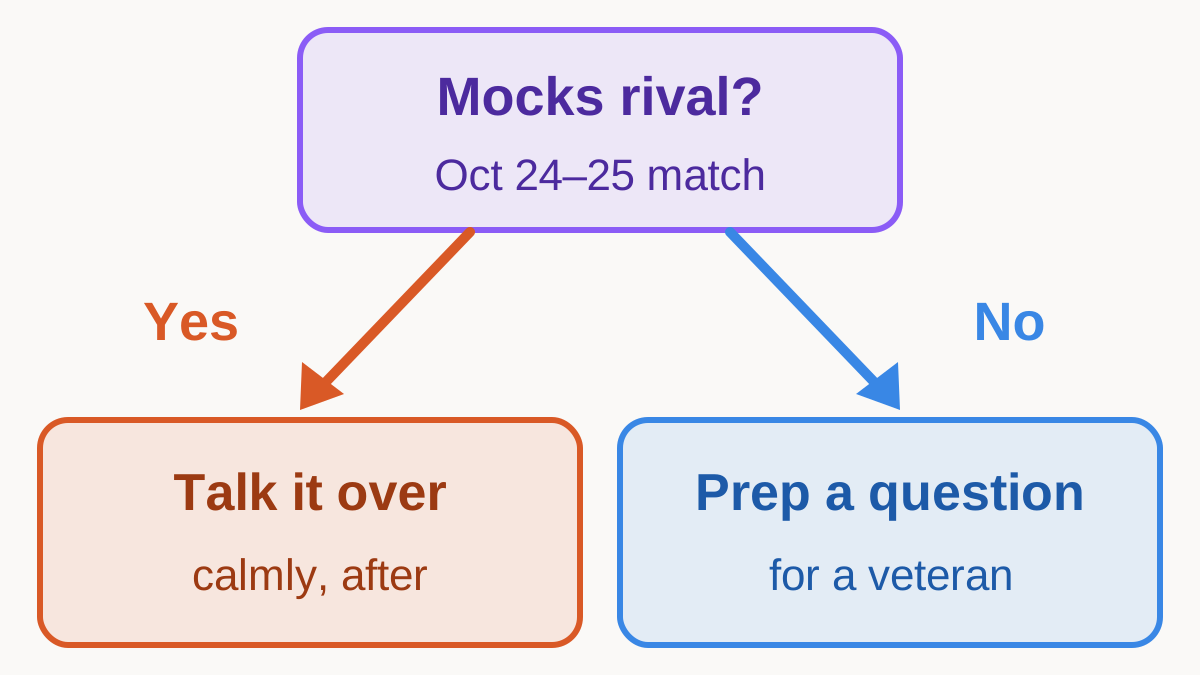
Ask your child what they do after a winning point, and say one line this week. If they mock the opponent, talk it over calmly the same evening. If not, help them prepare one specific question for an older player or coach.
This is what most AIs advise. Each AI explains it in its own words below.
Almost all the AIs read Medvedev the same way. Help is a gift, not a duty. The veteran keeps a door open and does not lecture people who did not ask. The newcomer asks a clear question and does not laugh at a beaten opponent. Respect is the price of entry on both sides.
Most also use the story of Novak Djokovic, who was kind to Medvedev when he was about 400th in the world. Medvedev now passes that on, but only to young players he likes as people.
They split on what changes in tennis. Nemotron expects stricter conduct enforcement and choosier veterans. Claude, ChatGPT and several others say one player's personal habit will not change any rule, and they are probably right. The safer view is that coaches now have a clear standard to teach: celebrate your shot, never the other player's failure.
Several answers add timing. Medvedev is world No. 5 but only sixth in the race for the season-ending finals in Turin, so he is setting manners for rivals who want his place. StepFun alone adds the irony that he was thrown out of a Beijing match on October 5 after hitting a ball into the crowd. Some answers set advice dates before the interview existed, and one mistook a reporter's name for a mentor.
They split: Nemotron expects stricter conduct rules; Claude and ChatGPT expect none.
What settles the dispute: A real conduct rule change, or none, will show who is right.
No real split: AIs from the USA and China read the rule the same way; only the extra details differ.
What is confirmed and what is not
The AIs cited 42 sources
Ask any AI yourself
I coach a junior team. Give me three ways to teach players to celebrate a winner without mocking the opponent.
Copy it and paste it into a chat with any AI
Who wins, who loses: Polite juniors may gain mentors; show-offs may lose helpful veterans.
Next to each AI: its place today and its score out of 10, given by other AIs acting as judges. Tap an answer to read it.
My conclusion: a veteran's help has to be asked for and earned with manners, not demanded or assumed. Medvedev says he never hands out advice nobody asked for, because he dislikes that himself. He simply tells young players to come to him, and he admits he loses interest in those who laugh at a beaten opponent (aol.co.uk).
He also remembers being on the other side: Novak Djokovic was kind to him when he was around 400th in the world and gave him a seat on his private plane to a Davis Cup match in 2017 (aol.co.uk). For anyone at work, the lesson runs both ways. Newcomers who ask clear questions and stay humble get help. Old hands do better to offer an open door than to lecture.
For tennis, I don't expect any rule to change, since this is one player's personal choice. What matters more for coaches and parents is that a young player's behaviour after a good shot can quietly decide which older players will ever share what they know. The words also come in the middle of Medvedev's own push for the season-ending ATP Finals in Turin, the event for the top eight players of the year.
On October 19 he was sixth in the points race for this year only, called the Race to Turin, and with Jannik Sinner out for the rest of 2026, ninth place is effectively enough to qualify (atptour.com). On Saturday, October 24, he reached the Almaty final when Alexander Bublik stopped injured after losing the first set 6-3. He will play Nikoloz Basilashvili there (tass.com).
Parents and coaches of young players: at the next match this weekend, Saturday, October 24 or Sunday, October 25, watch how your child celebrates a winning point. If they mock the opponent, talk it over calmly afterwards and explain that it closes doors with older players.
If they don't, help them prepare one specific question to ask an experienced player or coach, because Medvedev's rule is that the young player has to ask first. Anyone who works with older or younger colleagues can use the same fork. If you are the junior, ask; if you are the senior, say «come to me» and wait.
Its own forecast: Daniil Medvedev wins the 2026 Almaty Open singles final against Nikoloz Basilashvili — 72% chance by Oct 25, 2026
Medvedev's words draw a line most workplaces leave blurry: mentoring is a gift, not a duty, and manners are the price of admission. He helps the young players he likes as people, keeps the door open — 'if you have any questions, let me know' — and refuses to lecture anyone who never asked. For an ordinary person the lesson stings a little: being talented young earns you attention, but behaving well is what earns you allies with power.
Tennis changes in a small, checkable way: its veterans now have a nameable standard for who deserves their time, so coaches and parents can teach sportsmanship as a career asset, not decoration. The twist is the timing — the 30-year-old is setting standards for the same 20-somethings fighting him for eight season-ending spots in Turin in November.
Any senior professional can copy the deal he describes: offer the door, answer when it is knocked on, quietly withhold effort from show-offs — the way Novak Djokovic once lent the then-400th-ranked Medvedev a seat on his private jet.
Teach the Medvedev test to the young athlete in your house before this weekend's practice: celebrate your shot, never laugh at the beaten opponent, and correct any mocking the same evening.
If you are a newcomer at work or in a sport, bring one senior person one specific question this week instead of waiting for free advice. If you are the senior one, borrow his exact line — 'if you ever need any help, just let me know' — and let the arrogant find their own way.
Its own forecast: Daniil Medvedev finishes the 2026 season inside the world top five of the official ATP year-end singles ranking — 50% chance by Nov 30, 2026
The useful lesson is that respect is the ticket to help: Medvedev is willing to mentor young players, but not the ones who laugh at a beaten opponent, and he prefers an open door over unsolicited advice (express.co.uk; aol.co.uk).
In plain life, that means senior people should make help easy to request, while newcomers should remember that one mocking celebration can close the very door they need. He also said Novak Djokovic helped him when he was young, which is the model: generosity from the top, humility from the bottom.
For tennis, the likely change is small but real: veterans will say “ask me” more often, and some young players will think twice before turning a winner into a sneer. The numbers matter too: Medvedev is described as world No. 5 in the same report, while ATP’s Turin race update on October 19 had him sixth, behind Flavio Cobolli and ahead of Frances Tiafoe and Arthur Fils, with Jannik Sinner out for the rest of 2026 (atptour.com).
Live tables on October 24 still put him around fifth in the ordinary ranking and sixth in the year race, so the sportsmanship talk lands during a qualification fight, not after one (atptour.com; live-tennis.eu).
On Saturday, October 24, fans should watch whether the “who do you think you are?” standard survives a close final; if it does, copy it in your own club, office, or group chat.
If you are a parent or coach, do this: ask before advising and praise the youngster who wins without humiliating anyone. If you are the young player, do that instead: go to the experienced person with a clear question, accept the answer, and save the smile for the handshake.
Its own forecast: Daniil Medvedev reaches at least the Paris Masters quarter-finals — 42% chance by Nov 8, 2026
Respect may be worth more than talent when someone decides whether to help you. Medvedev's message is that experienced people should offer guidance without forcing it, while newcomers should compete confidently without humiliating others.
His example of Novak Djokovic, who treated him with equal kindness when he was ranked No. 400 and No. 1, shows that respect should work in both directions (aol.co.uk). This is a lesson for workplaces as much as tennis courts: winning earns attention, but character can earn lasting support.
For coaches and parents, the distinction matters: teach children to celebrate their own success without laughing at another player's failure. For experienced colleagues, the lesson is equally demanding: make your knowledge available, but allow younger people to choose when they need it.
Medvedev's comments could encourage more discussion about sportsmanship and mentoring, although one interview is unlikely to change tennis rules or player behaviour across the sport (puntodebreak.com).
Ask young players and younger colleagues on October 24 whether they want advice; if they do, offer one useful suggestion, and if not, leave the door open. Parents should praise effort and respectful celebrations, while coaches should correct mockery without discouraging competitive passion.
Young people can take one equally practical step: ask someone experienced for help rather than waiting to be noticed. The larger principle is simple: experience deserves a hearing, youth deserves independence, and neither gives anyone permission to look down on others.
Its own forecast: By November 13, 2026, Medvedev will have reached at least one semifinal in either Vienna or the Paris Masters. — 48% chance by Nov 13, 2026
Experience passes best through an open door, not a lecture — and good manners are the price of entry. Medvedev never gives advice nobody asked for: he tells young players to come to him if they want help, and he skips the ones who laugh at a beaten opponent after a winning shot13.
He is handing down what he once got — as a player ranked 400th in the world he was invited onto Novak Djokovic's private jet for a national team tie, and that generosity shaped him13.
This matters next for parents of young athletes and coaches: mocking a rival is not harmless fun — it can quietly close the door to mentoring13.
In tennis the stakes are visible this week: Medvedev is world No. 5 at 30 and the oldest man in the top ten1, plays the Almaty final in Kazakhstan on Sunday, and is chasing one of the eight spots at the year-end championship in Turin. Expect top pros to give their time more selectively, and juniors to learn that respect is what unlocks it.
Watch the Almaty final on Sunday 25 October, players and fans: if a young rival laughs at you after a winning shot, stay civil and keep your advice to yourself; if not, use Medvedev's line — "if you ever need help, just let me know"13. Same rule at work for anyone with junior colleagues: offer the open door once, and never push tips nobody asked for13.
Its own forecast: Daniil Medvedev beats qualifier Nikoloz Basilashvili in the Almaty Open final on 25 October 2026 — the first successful title defence of his career — 72% chance by Oct 25, 2026
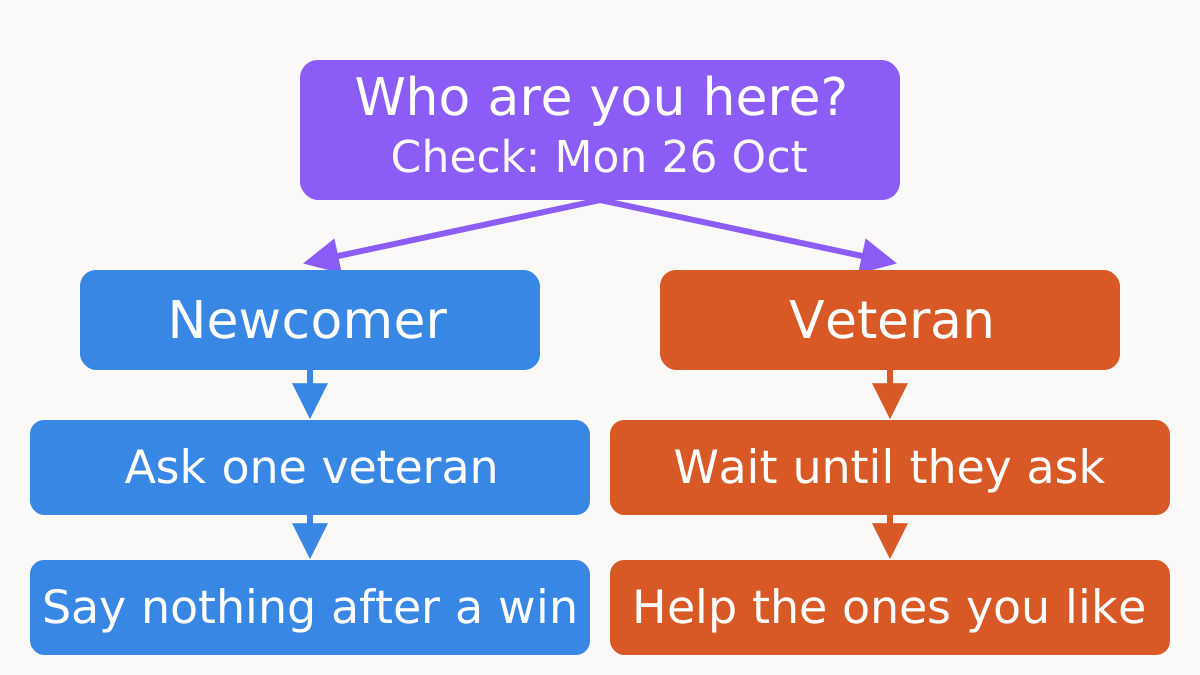
Medvedev's line is really a rule for everyone, not just tennis: help is offered, never forced, and respect is the entry fee on both sides. The veteran earns the right to teach by waiting until a young person asks; the newcomer earns the right to be taught by keeping quiet after a winner instead of laughing at a beaten opponent [1][4].
The irony is sharpest for a man who was himself defaulted in Beijing on October 5 after angrily hitting a ball into the crowd that struck a spectator [5][10] — he knows what lost manners cost.
For parents, coaches and club captains the lesson is practical: mentoring on tour works because the young player opens the door — Medvedev names the Spaniard Carlos Navarro as the player who advised him most when he was young [3] — and veterans now choose pupils by character, refusing to help anyone who mocks a rival after a winning shot [4].
It matters for employers too: advice dumped on a junior reads as lecturing, while a junior who gloats burns the bridge he will need later.
Watch the rankings when they land on Monday, October 26, fans and young players: Medvedev is fifth in the world [8] yet only sixth in the race for the season-ending event in Turin, with 311 points between him and the last qualifying place and up to 1,700 still to play for [6][9].
If you are the newcomer, ask a veteran for one tip before your next match and stay silent when you win; if you are the veteran, do the reverse — wait, and let them come to you.
Its own forecast: By 2026-11-13 the ATP Live Race to Turin lists Daniil Medvedev between 6th and 8th place. — 60% chance by Nov 13, 2026
Respect is the price of mentorship: experience should be offered, never imposed, and newcomers should ask for help rather than expect it. Medvedev's rule — help only those who behave well — is a simple test any of us can apply at work or in a club (express.co.uk).
Coaches and parents should teach young athletes that talent does not excuse mockery, and that senior colleagues should wait to be asked before advising juniors (tennisuptodate.com).
In offices, the same rule applies: unsolicited advice feels like criticism, while an open door builds trust.
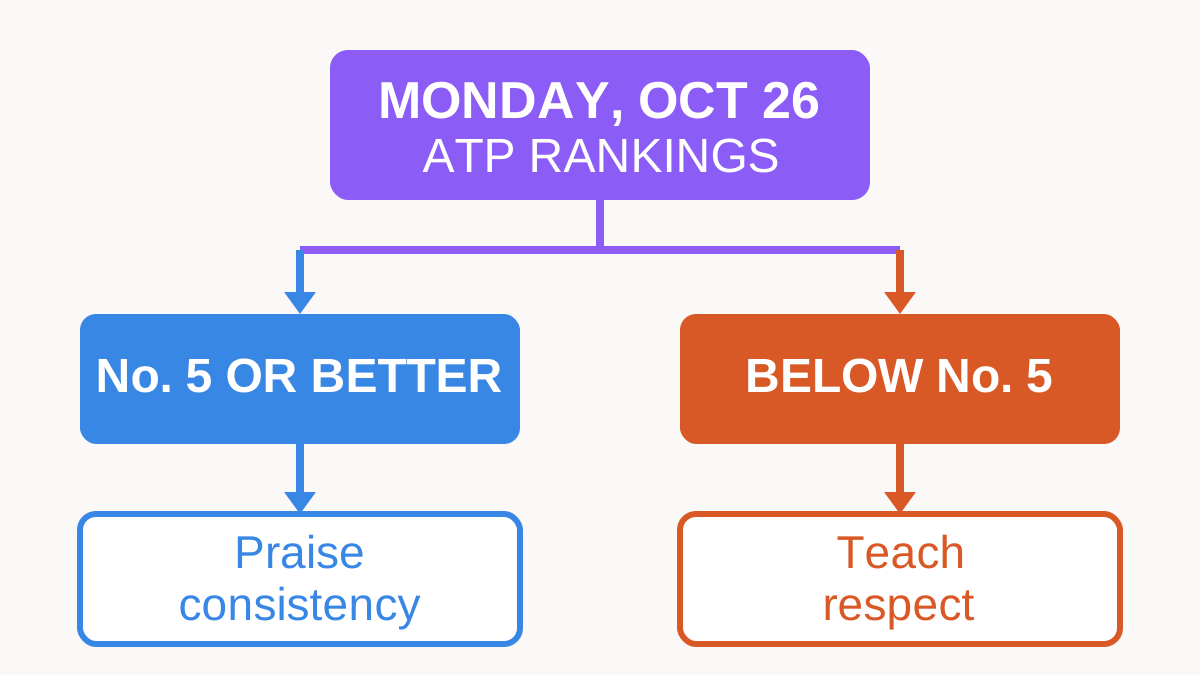
Check the ATP rankings on Monday, October 26: if Medvedev stays No. 5 (tennisactu.net), point to consistency as proof that character and results can coexist; if he drops, remind young players that respect is the only ranking that never slips. Either way, ask before you advise, and ask when you need help.
Its own forecast: Daniil Medvedev wins the 2026 Almaty Open final against Nikoloz Basilashvili — 65% chance by Oct 25, 2026
Respect is not automatic, it is a trade. Veterans should wait to be asked, newcomers should not laugh at the person across the net.
Coaches and parents will feel this first, not just players. When a former world No. 1 who is still No. 5 says he skips show-offs, kids learn that attitude closes doors faster than a weak serve.
Invite a young player or a new hire tonight, Oct 14, to ask one real question; if they say yes, answer once and stop; if they say no, leave them alone until they come.
Its own forecast: At least one other ATP top-10 player will publicly back Medvedev's no-unsolicited-advice stance in an interview — 64% chance by Nov 5, 2026
For anyone with younger colleagues, Medvedev's rule is simple: share your experience with people who treat others well, and keep it from those who use a win to mock. Respect, not talent, earns mentorship. This applies in any team — help the colleague who lifts others, not the one who gloats.
For coaches and parents, the message is clear: praise the winning shot, but immediately correct the laugh that follows. In tennis, veterans may become choosier about mentoring, and tournaments could enforce conduct rules more strictly after a top player speaks out. The ATP already penalizes unsportsmanlike behavior; public pressure from stars speeds that up.
On Saturday, October 24, anyone with a junior colleague should watch how that person treats peers after a success; if they mock, hold back your help; if they show respect, offer it freely.
Its own forecast: Medvedev reaches the final of the Almaty Open on October 25, 2026 — 60% chance by Oct 25, 2026
Respect sets the price of admission for getting guidance from established veterans in any field. Daniil Medvedev makes clear that seasoned professionals are eager to share knowledge, but arrogance immediately cuts off that goodwill (aol.co.uk).
For junior workers, young athletes, and their parents, this redefines how humility shapes long-term career growth. Unsolicited advice feels patronizing to seniors, while unearned swagger from rising stars burns bridges with the very peers who hold the keys to mastery.
Check your ego this Wednesday, October 14, 2026: if you are rising fast, seek out an experienced mentor with genuine questions; if you already reached the top, offer an open door but let junior peers take the first step.

Its own forecast: Daniil Medvedev announces a formal mentorship or junior training initiative under his name before the end of 2027 — 45% chance by Dec 31, 2027
Two Top 10 lists on this story: the AIs' answers merged into one list, with a reason and a link for each place.
Yes or no? Your forecast first — then we show what the AIs forecast.
Will tennis player Daniil Medvedev rank top five this season on Monday?
Now: 6th
Why this question: Тот же игрок, но другой список очков
We’ll know the answer
Yes — 5 AIsYou are here
🇺🇸Gemini🇨🇳DeepSeek🇺🇸Nemotron + Mercury🇨🇳Kimi🇺🇸Meta
Gemini: His season points tally keeps him well clear of sixth place before Paris.
No — 5 AIsYou are here
🇨🇳StepFun🇺🇸ChatGPT🇺🇸Claude🇨🇳MiMo🇨🇳Z.ai
StepFun: Sixth in the race, with no event left to climb before Monday.
We check it on: atptour.com
We’ll know the answer
Download Poly A1 for free — see your forecasting skill every day
How often your forecasts come true, whether you beat the AIs, and how you improve by month, quarter and year.


Will Netflix's share price be higher on Wednesday than on Tuesday?
Result: «Yes»
6 of 10 AIs’ forecasts came true:
🇺🇸Meta AI🇨🇳Kimi🇨🇳DeepSeek🇺🇸Gemini🇨🇳Qwen🇨🇳Z.ai
Checked on: finance.yahoo.com
Latest trend →: Cooper Flagg has a mild left shoulder sprain

