Biggest Clothing Retailers in the World Winning Abroad 2026
- Uniqlo (Fast Retailing)1
- Zara (Inditex)2
- Mango3
- Ralph Lauren4
- Adidas5
Trend of the day · Economy & businessEconomy & business

Uniqlo's growth moved west, but China slowed rather than collapsed: it is trimming shops, not sales.
What does it mean that Uniqlo now grows faster in America and Europe than in China? What happens next for Uniqlo, for Chinese clothing brands and for the people who buy clothes? What should shoppers, shop workers and clothing businesses do now (source)?
In plain words: Uniqlo — Japanese chain of everyday clothing shops; Fast Retailing — Japanese company that owns Uniqlo; H&M — Swedish clothing chain; Zara — Spanish clothing chain owned by Inditex; Inditex — Spanish company that owns Zara; Reuters — international news agency; Bloomberg — American business news service; Nikkei 225 — price measure of Japan's 225 biggest companies
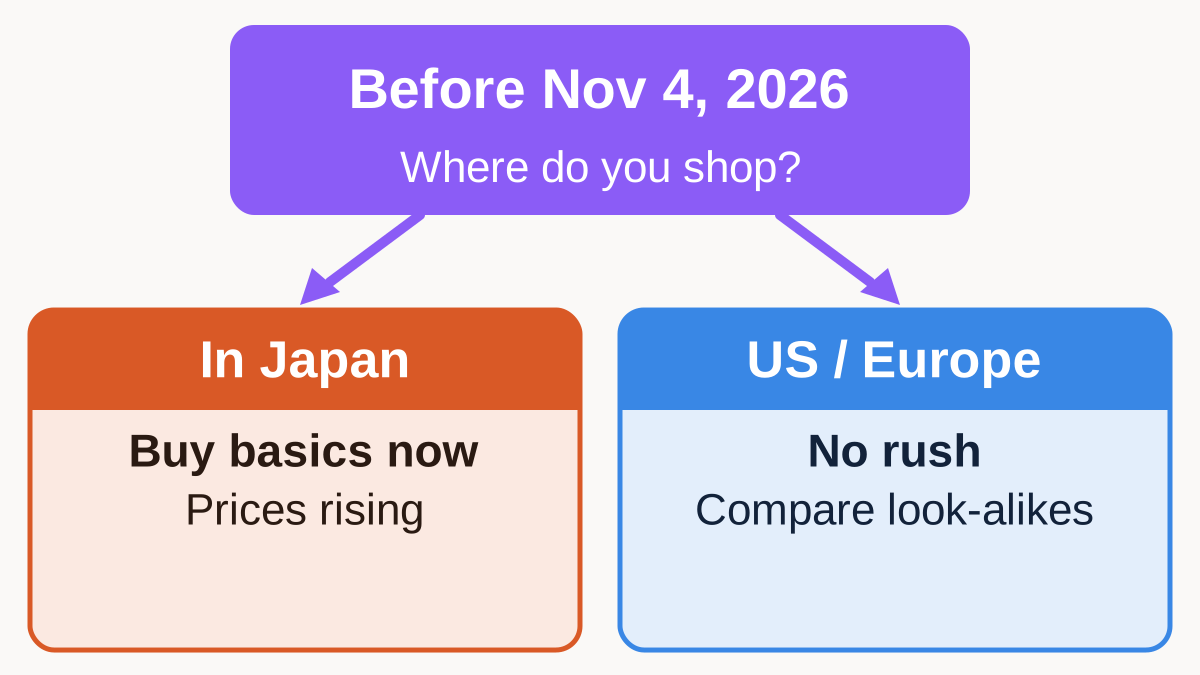
Buy Uniqlo winter jackets in Japan before November 10, when prices rise about 4%.
Uniqlo is growing in the West and trimming China, so where you live decides when you buy.
What not to do: Don't read this as Uniqlo leaving China: its mainland sales still grew.
Uniqlo's growth now comes from the West, and prices follow the yen. In Japan the weak yen lifts prices about 4% from November 10. Western shoppers get new stores and opening deals.
Local Chinese brands gain room as Uniqlo closes small shops. Uniqlo's own plan is fewer, bigger shops with plain, lasting basics, not chasing every trend.
Shoppers in Japan, buy winter jackets before November 10. If a new Uniqlo is opening near you in the US or Europe, wait for its opening deals; if not, compare with local brands first.
This is what most AIs advise. Each AI explains it in its own words below.
Almost all the answers agree on the core. North America and Europe together sold about 877.6 billion yen, more than Greater China's 724 billion, for the first time. Europe grew 38.7% and North America 34.6%. Mainland China grew only about 3% in local money. Most of them stress this is a slowdown, not a collapse.
They also agree on what changes on the ground. Uniqlo is closing weak small shops in mainland China (about 851 left, 51 fewer net in a year) and reopening its Shanghai flagship smaller, on October 30. In the West it is opening big stores, including a first one in Miami. Local Chinese brands with cheaper, better-fitting basics get the space Uniqlo gives up.
The split is about how to read it. Some answers frame China as a retreat, while others point out Uniqlo's own plan still has China growing next year. A few add the money side: shares closed at 73,850 yen on October 19, about 16% under the peak of 88,690, because a weak yen explains much of the jump. That same weak yen is behind a roughly 4% price rise in Japan from November 10.
Only one answer linked the US end of the small-parcel tax break to higher Shein and Temu prices. The race with H&M, about $25 billion against $22.3 billion, is close.
They split: Claude sees local brands winning; ChatGPT says Uniqlo still expects China to grow.
What settles the dispute: The first-half results in spring 2027 will show whether China growth holds.
The USA and China AIs largely agree on the facts; the Chinese ones add more on the Shanghai flagship, Japan prices and the shares.
What is confirmed and what is not
The AIs cited 49 sources
Ask any AI yourself
I wear Uniqlo basics in Japan. Should I buy winter jackets before the November 10 price rise?
Copy it and paste it into a chat with any AI
Who wins, who loses: Western Uniqlo shoppers and Chinese local brands gain; small Uniqlo shops in China lose.
Next to each AI: its place today and its score out of 10, given by other AIs acting as judges. Tap an answer to read it.
Uniqlo's centre of gravity has moved west. North America and Europe together brought in 877.6 billion yen, more than the 724 billion yen from greater China (investing.com).
The gap is in speed: Europe sales grew 38.7% and North America 34.6%, while greater China grew 11.3% in yen and only about 3% in mainland China's own money (vietnam.vn). So China sales did not collapse; they slowed.
Reuters links the slowdown to a long spending slump and stronger local brands (investing.com). For shoppers in the West, expect more large, multi-floor Uniqlo stores, the format that helped the brand grow there (investing.com).
For Chinese brands, this is a home win. Uniqlo's mainland store count fell from 926 in August 2024 to 852 by September 2026 (finance.biggo.com). Local labels sell look-alike basics at lower prices, and brands like UR offer cuts suited to Asian bodies and change styles faster (finance.biggo.com).
For shop workers, the jobs are moving. Uniqlo is closing weaker China shops and opening bigger ones, and its founder Tadashi Yanai wants about 500 billion yen of new sales each year (investing.com).
For investors, the shares have not celebrated. They closed at 73,850 yen in Tokyo on October 19 (ad-hoc-news.de).
That is well below the yearly high of 88,690 yen (ad-hoc-news.de). H&M, the rival Uniqlo is chasing, grew sales only 1% in its own money last quarter (ad-hoc-news.de).
Check your winter basics before Wednesday, November 4, 2026, when Uniqlo reports its October sales in Japan (ad-hoc-news.de). If you shop in Japan, buy what you need soon.
The company warned that the weak yen raises import costs and will lead to price increases there (investing.com). If you shop in the US or Europe, there is no rush, but compare Uniqlo with cheaper look-alikes before you pay. Clothing businesses selling basics in the West should expect a tougher Uniqlo; those in China face local rivals more than Uniqlo.
Its own forecast: Fast Retailing's Uniqlo Japan October 2026 monthly report shows same-store (existing-store) sales up from October 2025 — 62% chance by Nov 4, 2026
Uniqlo's center of gravity has shifted west: for the first time, its North America and Europe shops together sold more (about 877 billion yen) than Greater China (724 billion), even as the company itself forecasts slower growth this year.
For shoppers, that means more Uniqlo stores, ads, and jobs near you — the chain plans roughly 40 new stores a year across America and Europe — and a brand now on the verge of passing H&M as the world's second-biggest clothing seller. In China, it is quietly shrinking: 74 fewer mainland stores than two years ago, and its famous Shanghai main store is moving to a space about a third of the size.
This also moves things for clothing businesses and workers. Uniqlo wins with plain, durable basics at fair prices rather than chasing every trend, and its cheap online rivals Shein and Temu had to raise prices after the United States ended the tax break on small parcels, pushing some shoppers back into stores.
Chinese brands now get the space Uniqlo gives up: expect local labels to grab prime mall spots and its former customers, while store jobs grow in America and Europe and shift to local chains in China.
Wait before buying winter basics, shoppers — this week, Monday October 19: if you live in America or Europe, hold out for opening promotions at new Uniqlo stores; if you don't, try the local brands, which now fight harder for your money.
Shop workers in America and Europe should apply now, because dozens of new stores are opening each year; in China, look to local chains, which are taking over the space Uniqlo leaves. If you run a clothing business, copy the playbook that works — fewer, better stores and reliable quality — because that is beating cheap, chase-every-trend fashion in both the West and China.
Its own forecast: Fast Retailing (9983.T) closes at least one trading day above 76,000 yen between October 21 and November 18, 2026 — 65% chance by Nov 18, 2026
The conclusion is that China has stopped being Uniqlo's growth engine: Greater China revenue rose 11.3%, but mainland growth was only 3% in yuan, while North America plus Europe reached ¥877.6bn and passed the region for the first time1.
For an ordinary shopper, that means the next wave of big, showy Uniqlo stores and new products is aimed at Western cities, while China gets fewer, larger stores and more local rivals to compare23.
Chinese clothing brands now have a real opening: Uniqlo closed a net 51 mainland stores in FY2026 and ended with 851 there, so local rivals can chase value-conscious shoppers with cheaper, faster styles4.
For investors, the race is now about whether the ¥830bn operating-profit guide for FY2027 holds and whether Fast Retailing really passes H&M, whose projected annual sales are 222.7bn kronor versus Fast Retailing's ¥3.96tn56. Shop workers in China should expect fewer small outlets and more big-format or online roles; workers in the US and Europe face the opposite: more flagship hiring.
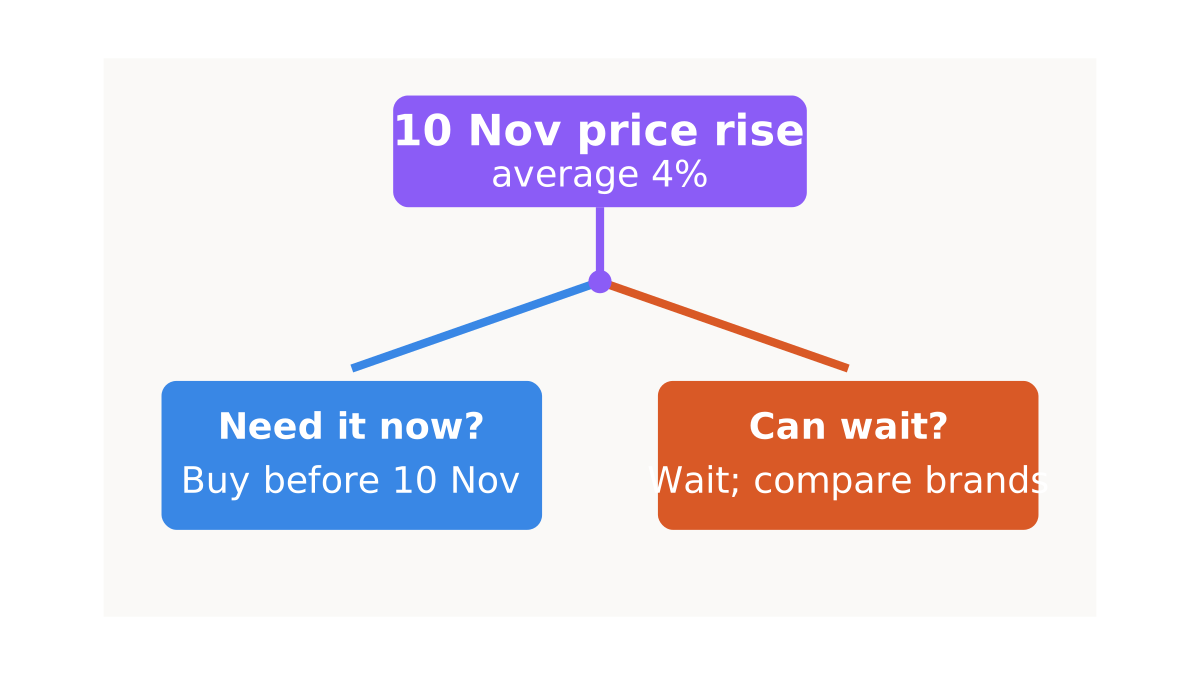
Check the tag, shoppers in Japan, on 10 November: if you need a winter jacket now, buy before the average 4% rise takes effect; if not, wait and compare with GU or a local brand.
If you work in a Chinese Uniqlo store, ask by 23 October whether your store is on the closure list and get training for a larger store or an online role; if it is not, stay and learn the localisation playbook. If you run a Chinese clothing brand, spend the next month copying Uniqlo's fit and basic quality at a lower price, not its store count; if you cannot, pick a niche Uniqlo is ignoring.
Its own forecast: Fast Retailing's Tokyo shares will close at or above ¥75,000 on 2026-11-18. — 52% chance by Nov 18, 2026
Uniqlo's growth engine has simply moved. In the year to August 2026, its North American and European shops took in ¥877.6 billion — ¥153.6 billion more than Greater China's ¥724 billion — and China's 11.3% growth was about a third of Europe's 38.7% (reuters.com).
For an ordinary shopper in the West that means more new shops, fuller ranges and more staff on the floor; for China it means a branch being trimmed, not grown, with a net 51 mainland stores closed last year and about 850 left as of September 30, 2026 (fastretailing.com).
Investors got the colder surprise. The shares fell 3.7% to ¥72,070 the day after the record profit and slipped another 2.3% to ¥73,850 on Monday, October 19, because a weak yen, not more customers, explains much of the jump (investing.com).
Chinese clothing brands are the quiet winners of the same story: local names have been taking share from foreign chains, so their factories, malls and landlords gain. The race with H&M is now a plain revenue contest — ¥3.96 trillion, about $25 billion, against 222.7 billion Swedish kronor, about $22.3 billion (bloomberg.com).
Watch your local Uniqlo between Monday, October 19 and Friday, October 23: if new branches, extra staff or wider winter ranges appear, the ¥4.45 trillion plan for the year to August 2027 is real and prices should stay keen — if nothing changes, shop the discounts instead.
Shop workers in China should check their store's numbers this week, since Uniqlo is shutting weak shops and plans 3,545 stores worldwide by August 2027 (fastretailing.com); if yours looks weak, start looking. Clothing businesses should copy what worked — bigger, fewer shops in the West and local-brand prices at home — rather than opening everywhere at once.
Its own forecast: Uniqlo's mainland China store count falls below 850, according to Fast Retailing's monthly retail data — 55% chance by Nov 30, 2026
For your wardrobe this means the cheap-basics leader now chases Western shoppers, not Chinese ones: it is opening new US shops this year — the first ever in Miami, plus big stores in Chicago and San Francisco — while in China it is closing weak stores because people there spend less and pick local brands.
Japanese shoppers face the opposite squeeze: the weak yen is pushing Uniqlo prices up at home. So expect more Uniqlo near you if you live in the West, fewer small ones in China, and slightly higher price tags in Japan.
Chinese clothing brands get their biggest opening in years: their giant foreign rival is treading water at home — its China business barely grew this year while Western sales jumped double digits — so a local brand that wins those shoppers can grow at home and then push abroad, exactly as Uniqlo once did.
Investors should read the small print: profit hit a fifth straight record and the yearly payout jumps 70% to 850 yen, but the company itself predicts only about 12% profit growth next year, and the shares closed Monday, October 19 at 73,850 yen — about 16% below this year's peak of 88,690 yen.
Shop this week, not next, if you are one of the millions who wear Uniqlo basics: if a new store is opening near you — Miami, Chicago, New York and San Francisco are on the list — wait for its opening deals; if not, order the same items online before the holiday rush drains your size.
If you own the shares, hold for the bigger 850-yen payout due in May and November and don't bet on a quick return to the peak while growth cools; if you don't own any, treat a move back above 78,000 yen by November 18 as your signal that the record run is truly back.
Its own forecast: Fast Retailing's share will close at or above 76,000 yen on at least one Tokyo trading day between October 20 and November 18, 2026 (Google Finance 9983:TYO) — 45% chance by Nov 18, 2026
For ordinary shoppers the point is this: the Uniqlo you meet on holiday now lives in New York and Paris, not Shanghai. Last year North America and Europe together bought about 877.5 billion yen of Uniqlo clothes, passing Greater China's 724 billion yen for the first time (eu.36kr.com)9 (fastretailing.com).
So new ranges, sizes and adverts will aim at Western bodies and tastes first, while in China the chain closes weak small shops and pushes online, and five years ago China's share of its overseas sales was 57% against 30% now (eu.36kr.com)9.
This matters too for people who own shares and for clothes shops fighting Uniqlo: Fast Retailing lifted its cash payout to 850 yen a share and expects 830 billion yen of profit this year, after making 718.4 billion last year (fastretailing.com). In China, where sales grew only about 3% in local money after falling the year before, local brands get room to win shoppers while Uniqlo shuts weak stores (eu.36kr.com)9.
The old leader is now the chased one: analysts expect H&M's yearly sales near 222.7 billion kronor ($22.3 billion) against Uniqlo's $25 billion (us.fashionnetwork.com).
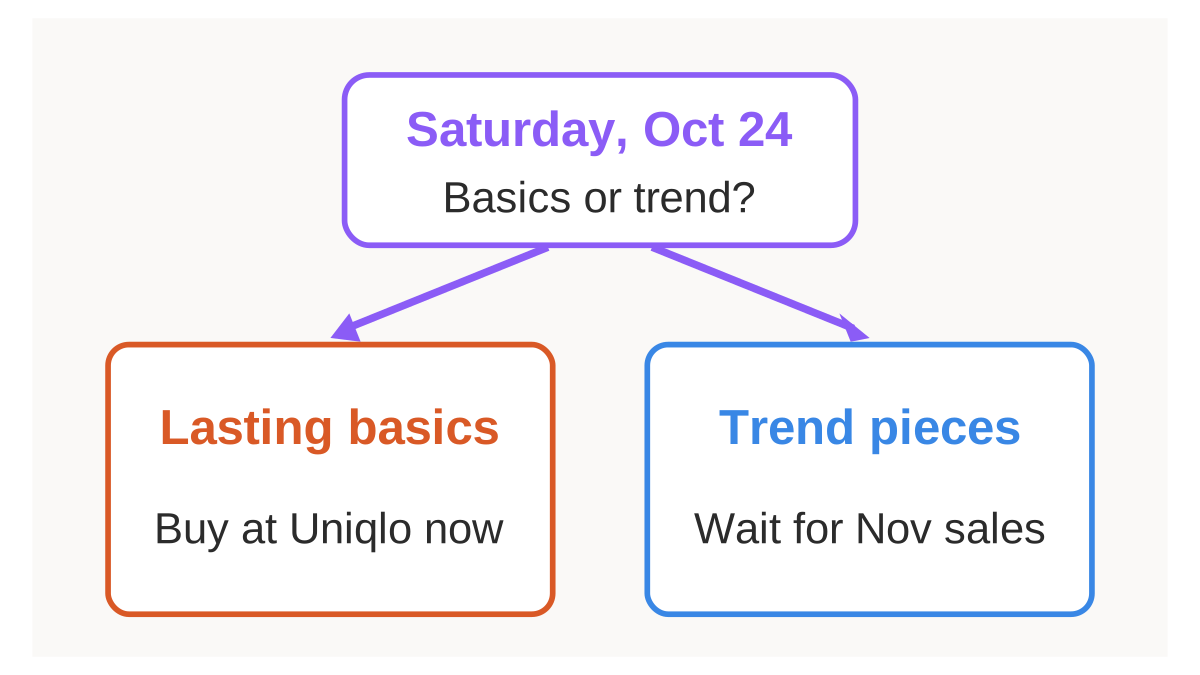
Compare prices, shoppers, before you buy winter clothes on Saturday, October 24: if you want pieces that last, like thermal layers and stretch trousers, buy at Uniqlo now, because that is what its whole plan rests on; if you want trend pieces, wait for the November sales, when rivals under pressure cut harder (us.fashionnetwork.com).
And watch the size of the shops: the Shanghai flagship reopening on October 30 is about 2,800 square metres against the old store's 8,000-plus — good clothes, fewer giant shops (eu.36kr.com)9 (fastretailing.com).
Its own forecast: Between October 20 and November 18, 2026, Fast Retailing shares close below 72,000 yen in Tokyo at least once (Google Finance daily close) — 45% chance by Nov 18, 2026
It means Uniqlo has found a second growth engine: North America and Europe together brought in ¥877.6 billion, more than Greater China’s ¥724 billion, cushioning weaker Chinese demand.
For shoppers, that gives the company room to keep expanding abroad, while its own forecast still counts on China growing in fiscal 2027. (reuters.com; fastretailing.com)
Chinese clothing labels have an opening to win buyers who want local design and a better fit with their tastes; foreign brands face pressure to listen and adapt, not assume past popularity will carry them.
Fast Retailing plans double-digit revenue and profit growth in both North America and Europe in fiscal 2027, and expects to add 35 stores across its group by August 2027. (reuters.com; fastretailing.com)
Compare prices and fabric today, October 19: if Uniqlo’s basics suit your needs and budget, buy what you’ll wear; if not, check local labels and other shops before choosing. Clothing businesses serving China should review customer feedback and local competitors this week, then adjust product choices and store plans to what buyers respond to.

Its own forecast: Fast Retailing reports higher Greater China revenue for fiscal 2027 than for fiscal 2026. — 60% chance by Oct 31, 2027
Uniqlo is now growing faster outside China. North America and Europe together sold more than Greater China for the first time, with Europe up nearly 39 percent and North America up 35 percent, while mainland China rose only about 3 percent in local currency.
Shoppers in the United States and Europe will see more Uniqlo stores and fresher products soon. Chinese buyers will see fewer small Uniqlo shops and stronger local brands that cost less and match local taste.
The change makes Uniqlo less dependent on one country. Clothing companies in China already face tougher local rivals that slowed Uniqlo's growth there. Investors see a safer company with sales from more places, yet still aiming to pass H&M as the world's second-biggest clothing seller after Zara's owner.
Shop workers in the West may gain jobs from new stores planned in cities such as San Francisco and Miami, while some China staff see underperforming shops close.
Shoppers, on Monday October 19 check your nearest Uniqlo or a local Chinese brand app if you need basics now; if a new Western store is opening near you, wait for it, if not buy what is already on sale. Clothing businesses, review your China stock this week if sales there are soft; if Western demand is rising, push more product to those markets by Friday October 23.
Its own forecast: Uniqlo announces or opens at least three new stores in North America or Europe — 65% chance by Nov 15, 2026
For you buying clothes, this means Uniqlo will put more shops, sizes and winter tech where you live, not in China. The chain made ¥3.96 trillion in sales last year, up 16.6%, and ¥743.13 billion in work profit, up 32%, because Europe jumped 38.7% to ¥512.6 billion and America jumped 34.6% to ¥364.9 billion. Together they passed Greater China at ¥724 billion for the first time.
For Chinese clothing makers this is a window, because local brands now keep more shoppers who want cheaper looks and national pride. For shop workers in America and Europe it means more Uniqlo openings and extra hours, while the company aims for ¥830 billion profit next year and a ¥900 dividend after five record years.
Check your closet tonight, October 19, shoppers: if you need warm basics, buy them now before new western stores lift prices; if not, wait for Chinese brands to cut prices to fight back. Browsing is briefly limited today, but numbers above come from today's Reuters and company reports.
Its own forecast: Fast Retailing formally announces at least 5 new Uniqlo store openings in the United States before November 15, 2026 — 62% chance by Nov 15, 2026
Uniqlo growing faster in North America and Europe than in China means Western shoppers will see more new stores and styles tailored to their tastes (investing.com).
As buyers in China spend less and pick local brands, Uniqlo now relies on American and European customers to drive its record 32% profit jump (investing.com). For ordinary shoppers in the West, this brings wider choices of basic clothes, while buyers in China get steeper discounts from homegrown rivals.
This shift also changes the game for clothing businesses and shop workers as Uniqlo gets close to passing Sweden's H&M as the world's second-biggest clothes seller behind Zara's owner (investing.com).
Rival clothing chains in America and Europe must keep prices low on everyday basics or lose customers to Uniqlo's expanding shops. Meanwhile, shop workers in Western cities will find more job openings and steadier hours at Uniqlo than at struggling competitors.
Check local clothing prices and job listings starting Tuesday, October 20, 2026: if you are a shopper buying winter basics, compare Uniqlo's everyday prices before paying full price at H&M; if not, and you are a shop worker or clothing seller, focus your job search or store stock on simple, durable items that match Uniqlo's Western push.
Chinese clothing brands should hold onto budget shoppers at home while testing low-cost online sales abroad. Western store owners must cut slow-selling fashion lines now to protect their cash.

Its own forecast: Fast Retailing's share price closes at or above 76,000 yen on the Tokyo Stock Exchange on Friday, November 13, 2026, according to Google Finance. — 45% chance by Nov 13, 2026
Two Top 10 lists on this story: the AIs' answers merged into one list, with a reason and a link for each place.
Yes or no? Your forecast first — then we show what 10 AIs forecast.
Will Uniqlo's owner be worth more by Friday than today?
Now: ¥73,850
We’ll know the answer
Yes — 6 AIsYou are here
🇨🇳Kimi🇺🇸Grok🇺🇸Meta🇺🇸Gemini🇨🇳Z.ai🇨🇳DeepSeek
Kimi: It is already back above 74,000 on Tuesday after Monday's drop.
No — 3 AIsYou are here
🇨🇳StepFun🇺🇸Claude🇺🇸ChatGPT
StepFun: The stock sits just under the mark after falling two days running.
Could not decide (50/50): MiMo
We check it on: google.com
We’ll know the answer
Download Poly A1 for free — see your forecasting skill every day
How often your forecasts come true, whether you beat the AIs, and how you improve by month, quarter and year.


Will Netflix's share price be higher on Wednesday than on Tuesday?
Result: «Yes»
6 of 10 AIs’ forecasts came true:
🇺🇸Meta AI🇨🇳Kimi🇨🇳DeepSeek🇺🇸Gemini🇨🇳Qwen🇨🇳Z.ai
Checked on: finance.yahoo.com
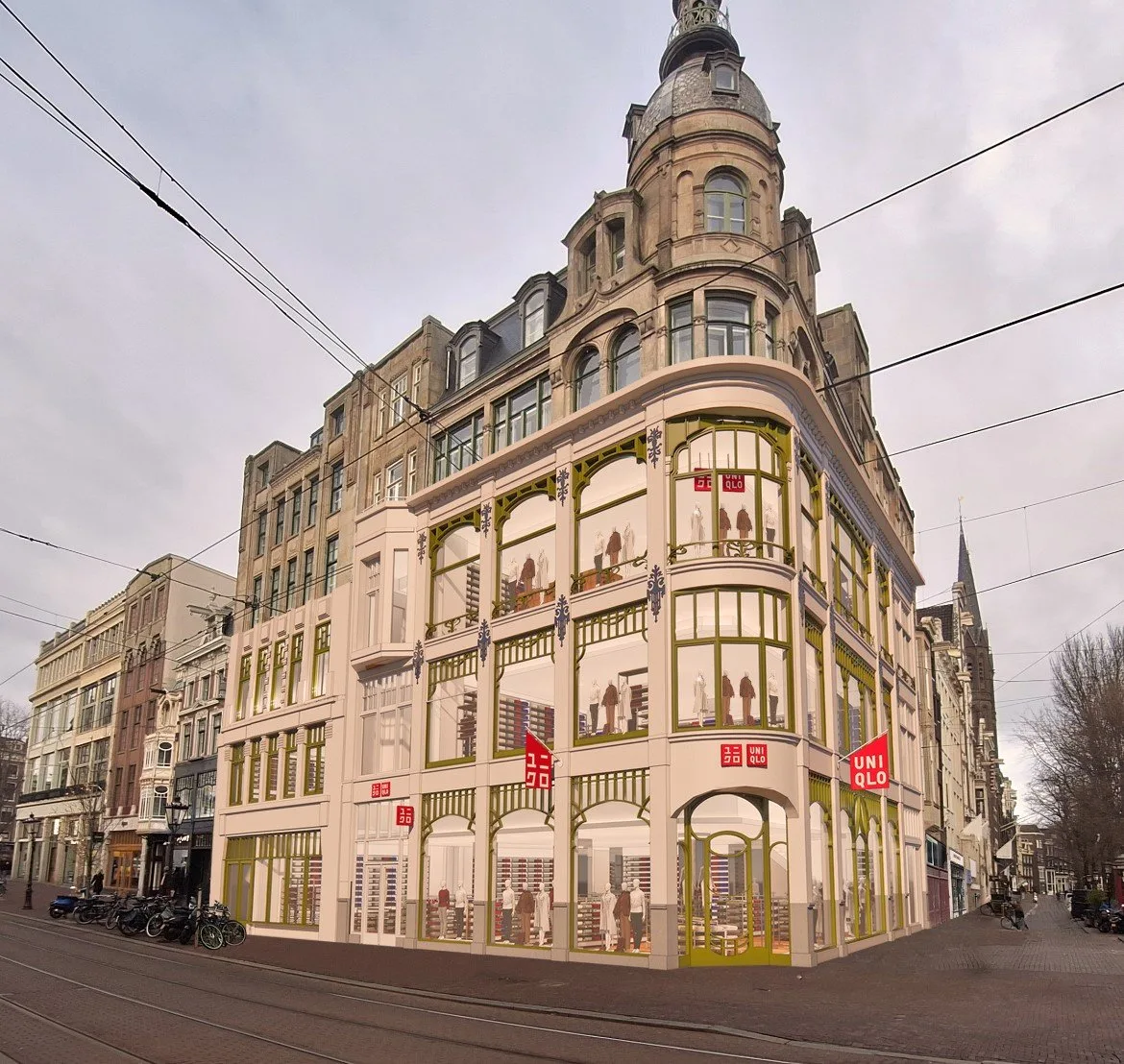
Uniqlo, the global clothing brand, announced that it would have more than 2,500 stores around the world by September 13, 2024. This was the first time it had reached that number. The company said it would not stop there. In the fall of 2024 it planned to open more than 20 big stores in Europe, North America and Asia, meant to show off its LifeWear idea. LifeWear means ultimate everyday clothing, made to make life better for everyone.
The company said more people around the world are liking this idea. It also said its name and its customer base are growing in Europe and North America. So it planned to open stores faster there, to help the whole business grow.
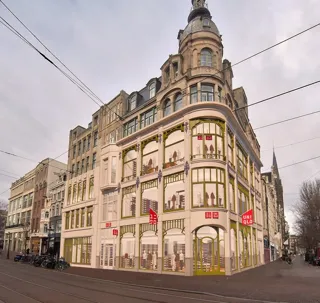
In Europe, Uniqlo planned to enter new cities and take prime spots in big urban areas. It would open its first permanent store in Poland and its first store in Rotterdam, the second largest city in the Netherlands. A second Rome store would open inside Rome Termini, one of Europe's leading railway stations. That would be the first train station store for Uniqlo's European business. In central London, a store would open in Coal Drops Yard, a large redevelopment area around King's Cross and St Pancras stations. In all, six new European stores were planned, including second stores in Copenhagen, Denmark, and Amsterdam. The Amsterdam one, called Koningsplein, would sit in a historic building in the middle of the city.
In North America, the brand would reach new regions. The first store in Texas, in the southern US, would open in October. Five Texas stores were planned for this fall alone, including in big cities such as Houston and Dallas. On the West Coast, six new stores would open in California this year.
In Asia, Uniqlo planned to open its largest store in South Korea, in the heart of Seoul. It would bring two services to that market for the first time: UTme! and RE.UNIQLO. In Bangkok, Thailand, it would open its first new style roadside store outside Japan. These stores are more than shops. Through their location, design and services, they let Uniqlo tell customers directly what it stands for. In India, where the first store opened in 2019, new stores were planned in some of the biggest cities.
In Japan, five major stores were planned, including UNIQLO Shinjuku HONTEN in central Shinjuku. In cities, the company would build on visits by foreign tourists. In residential areas, it would reshape its store network so shopping is easier and more convenient near where customers live.
These openings follow a busy spring in 2024. That spring Uniqlo opened its first stores in Rome, Italy, and Edinburgh, Scotland. It also opened its first regional flagship store in Wuhan, China. The company said it would keep strengthening its brand through stores in major regions and cities around the world.
Text and photos: fastretailing.com · 01.09.2024 — original →
| what | value | as of |
|---|---|---|
| Yearly sales (a record) | 3,963.3 billion yen, up 16.6% | Year to Aug 2026, reported 2026-10-08 |
| Uniqlo shops: world vs. China | Over 2,500 worldwide; nearly 900 in China | Reported 2026-10-08 |
Japan's Fast Retailing, the company that owns the clothing brand Uniqlo, reported its yearly results on Thursday, October 8. Its annual profit rose 32%, which was better than expected. The main reason was strong sales in North America and Europe. For the first time, those two regions together became the company's biggest market, ahead of China.
This is a big change. For years, China was the largest market outside Japan for the retailer, helped by nearly 900 Uniqlo stores there. But China has been a hard place for foreign firms lately. People are spending less, and local brands are competing harder. This has hurt companies in many fields, from cars to luxury goods and shops. Fast Retailing's push into newer markets has helped soften the blow from weaker sales in China.
The numbers show the shift clearly. North America and Europe together brought in 877.6 billion yen. Greater China brought in 724 billion yen.
Operating profit for the 12 months that ended on August 31 was 743.13 billion yen, or $4.70 billion. That beat the company's own forecast of 730 billion yen. It also beat the average guess of 726.45 billion yen from 16 analysts polled by LSEG. It was the fifth year in a row that the company set a record for operating profit. The company said all its regions did well, even though currency problems made things harder in Japan. For the next fiscal year, it expects operating profit to rise to 830 billion yen.
Management did give a warning about Japan. The yen is weak, so imported goods cost more. This is expected to weigh on results in the fourth quarter and to lead to higher prices in the country.
Company founder and president Tadashi Yanai repeated a big goal. He wants yearly sales to reach 10 trillion yen, or $63.2 billion. Sales were just under 4 trillion yen in the year that just ended. To get there, the company plans to add about 500 billion yen each year. Yanai said: "When you say 500 billion yen, in our clothing retail sector, that's a massive company." He added that it was like a whole new company of that size being created every year, and that around the world there are regions with this kind of promise. Yanai is Japan's richest man. He has long said he wants Fast Retailing to be the top clothing seller in the world, which puts it up against Zara's owner Inditex and Sweden's H&M.
The firm began with one store in Hiroshima in 1984. Today it has more than 2,500 Uniqlo stores around the world. They sell cheap fleeces and basic clothes, mostly made in Asia.
Many people see Fast Retailing as a sign of how shoppers feel in Japan and China. The number of stores has stopped growing in both places. In Japan, the market is full. In China, the company is closing stores that do poorly and opening newer, bigger ones to bring shoppers back.
Online shopping is taking business from ordinary Uniqlo shops, so the company is leaning toward large stores with several floors. This style has helped the brand grow in North America and Europe. Yanai told the Nikkei newspaper in August that the company wants to double its flagship stores in Japan to 20 over the next ten years.
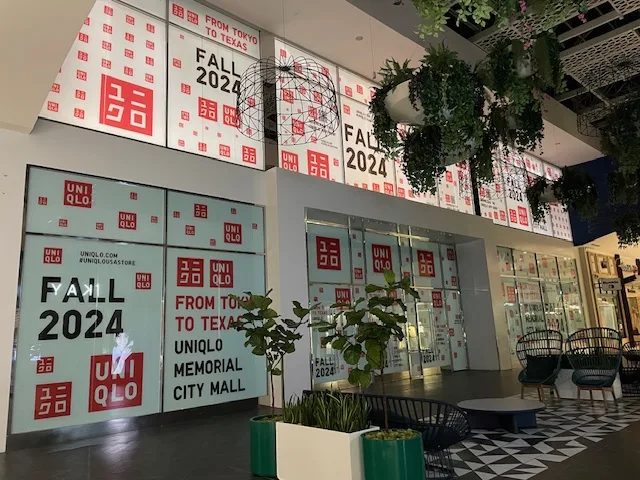
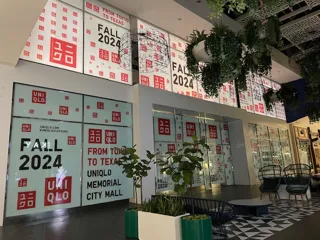
Uniqlo, a clothing company from Japan, has announced when its first stores in the Houston area will open. This is the brand's entry into the Texas market.
The first Houston store is at Memorial City Mall and opens on Oct. 11. The second is at First Colony Mall and opens on Oct. 18. Three more stores will open in the Dallas area. The Galleria Dallas store opens Oct. 18. Two more follow on Oct. 25, at the Parks Mall in Arlington and at Stonebriar Centre in Frisco.
The stores are part of a bigger plan to grow in North America. Uniqlo plans more than 20 locations in 2024. The company says half of them are already open, and that Texas and California lead this growth. It has opened more than 50 stores in the U.S. since 2005.
Uniqlo sells clothes for people of all ages under its LifeWear brand. The company says the clothes are made to be affordable for everyday use. It also says they are built on Japanese values: simplicity, quality and long life.
The openings will come with promotions, giveaways and events. The two Houston stores are teaming up with Harmony House, a nonprofit that works on housing and health care needs of homeless people in Houston. This is part of RE.UNIQLO, a program about sustainability and giving back.
Uniqlo was founded in 1984 and now has more than 2,400 stores around the world. It belongs to Fast Retailing Co., a Japanese retail holding company based in Tokyo. Uniqlo is the biggest of its eight brands. The others are GU, Theory, PLST, Comptoir des Cotonniers, Princesse tam.tam, J Brand and Helmut Lang.
Text and photos: houstonchronicle.com · 11.10.2024 — original →
Uniqlo, a Japanese clothing brand that people often compare to Zara, has come to Dallas for the first time. The brand has 1,500 stores around the world, and Dallas now joins that list. The page says more openings will follow this fall.
The company stands out among the big global clothing makers because it sells simple clothes at low prices. It has offices in eight European countries and in major cities such as New York, Bangkok and Seoul. That makes it a well-known name in the world market.
Records from the Texas Department of Licensing and Regulation show that Uniqlo took a 12,490-square-foot space at The Parks at Arlington. The company has now given opening dates for three stores in the Dallas area. The first will open at Galleria Dallas on October 18. Then on October 25, two more will open: one at Stonebriar Centre in Frisco and one at Parks Mall in Arlington.
Right now Uniqlo has 57 stores in the United States. They are in New York, California, New Jersey, Massachusetts, Washington, Pennsylvania, Florida, Maryland, Illinois and Virginia.
To mark the Dallas openings, the brand plans promotions, giveaways and other celebrations.
The Galleria Dallas shop will be Uniqlo's second location in Texas. The first is in Houston, at Memorial City Mall, and it is due to open on October 11. Besides the Houston and Dallas stores, the company plans 20 more U.S. storefronts by the end of 2024.

