Oldest human site in Americas: 10 Ice Age places 2026
- Lake Mungo (Willandra Lakes), Australia1
- Ohalo II, Sea of Galilee, Israel2
- Dolní Věstonice, Moravia, Czech Republic3
- Yana Rhinoceros Horn Site, Siberia4
- Paisley Caves, Oregon5
Trend of the day · Science & spaceScience & space

White Sands was a changing shore, but footprints show visits—not how people coped.
What does this research change about how we picture life at White Sands, and what should people like today’s readers take from it (source)?
In plain words: White Sands — a national park in New Mexico; Ice Age — a long period of colder global climate
Check the park closure page before your White Sands trip.
Before a White Sands trip, check whether the park has closed the road.
The tracks show visits, not a permanent settlement. That makes the changing shore a vivid scene, but not a full account of how people lived. The answers do not establish whether the shifts helped or harmed them.
The footprints are not a headcount. A model cited by one answer suggests a crowd can leave no prints while a few walkers leave many. The layers record preserved moments, not everyone who passed through.
Travelers, check the park page before you leave. Before your White Sands trip, check the National Park Service closure page; if the road is closed, postpone the visit. If it is open, follow the park's current visitor guidance.
The answers agree that White Sands was a changing lakeshore, not a fixed Ice Age scene. Pollen and sediment show forests giving way to oak and sagebrush as Lake Otero shrank, while people kept walking there.
They split over what that says about the people. Some call it proof of human adaptability; the more careful answers say footprints show presence during change, not whether people thrived, suffered, or moved.
The tracks are snapshots shaped by mud and chance, not a census or a record of daily life. A model cited by one answer suggests even a crowd might leave no prints, while a few walkers could leave many.
They split: Some call it adaptation; others say the tracks cannot show how people coped.
What settles the dispute: A better record of daily life would show how people responded.
Both groups saw a changing landscape; Chinese answers added more about what footprints cannot prove.Only the AIs from one country noticed: AIs from China — one noted that crowds can leave no prints while a few leave many.
What is confirmed and what is not
The AIs read 15 sources
Ask any AI yourself
I live near a changing lake or forest. What local records could show how it has changed within my lifetime?
Copy it and paste it into a chat with any AI
Who wins, who loses: Visitors gain a richer story; researchers still lack a full record of how people lived.
Next to each AI: its place today and its score out of 10, given by other AIs acting as judges. Under each answer: its model — the exact version of the AI. Tap an answer to read it.
The new study, published October 14 in Science Advances, turns the White Sands footprints from a fixed snapshot into a moving scene.
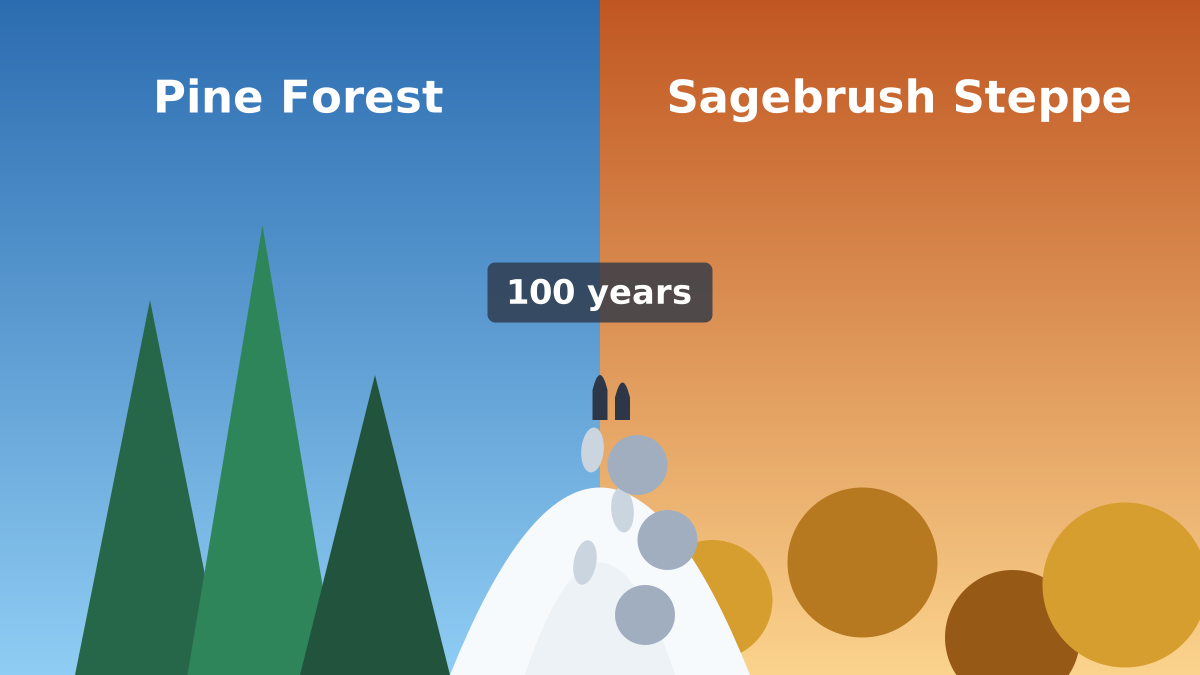
Between about 23,500 and 21,700 years ago the land around the trackmakers flipped fast enough to watch in one lifetime: pine, fir and spruce forest gave way to oak and sagebrush in roughly a century, the giant Lake Otero shrank and died over about 1,500 years, and a hard drought around 23,200 years ago matched a warming spike seen in Greenland's ice. Through it all, people kept walking there beside mammoths, giant sloths and dire wolves.
For Indigenous communities, co-author Ed Jolie says the work backs what Native nations have long said: their ancestors were here "since time immemorial."
For everyone else the echo is today's climate question — the same ground shows people living through sharp local changes that tracked global climate, proof humans can adapt, not that the change was mild. The dating itself also got about five times more precise, tightening the case that people were in North America at the peak of the last ice age.
Start with the free university write-up today, curious readers — Saturday, October 17 — if you want the story in five minutes; if you want the full evidence, open the Science Advances paper itself. Travellers planning a White Sands trip this fall should check the park's website before going, because the footprint sites are currently closed to visitors.

Its own forecast: By November 16, 2026, the Associated Press or Reuters will have published its own article on the October 14 White Sands study. — 50% chance by Nov 16, 2026
Stop picturing a still museum backdrop: within one human lifetime the shore flipped from pine forest to oak and sagebrush plains, and a sharp drought struck around 23,200 years ago (popsci.com; theconversation.com).
The big lake had been shrinking since about 23,600 years ago, and the air ran roughly 4°C colder than today (theconversation.com). For an ordinary reader the point is human: people 23,000 years ago were not frozen victims of the ice age — they kept coming back to the same beach while its water, plants and weather shifted under their feet (theconversation.com).
Footprints are luck, not a headcount, and that rewrites the scene too. The team's new computer model shows a busy crowd can leave zero prints while a few walkers leave hundreds, so the 20 layers of tracks mean repeated visits, not a permanent village (theconversation.com).
That matters for families teaching kids about the first Americans and for travellers weighing a White Sands trip: these prints are rare frozen moments when "humans, mud, water and chance came together" (livescience.com).
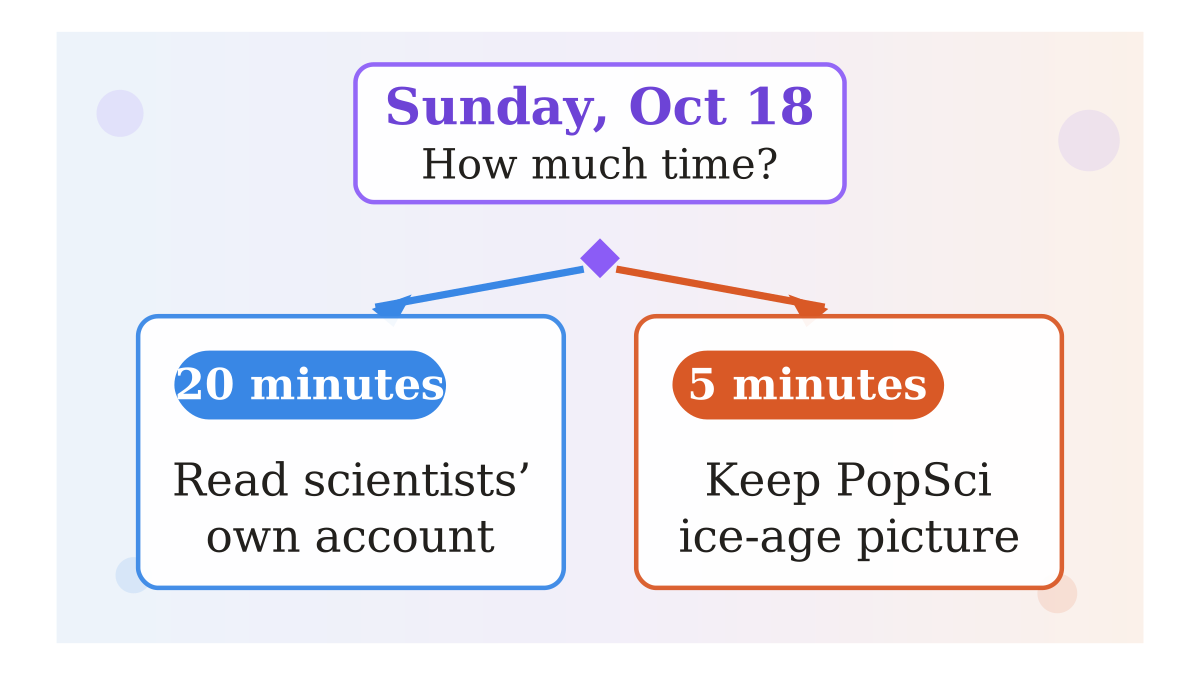
Give it 20 minutes this Sunday, October 18, curious readers: if you want the whole story, read the dig scientists' own account on The Conversation; if you have five minutes, keep the Popular Science piece with its ice-age painting (theconversation.com; popsci.com).
And if your family can reach White Sands before the year ends, walk the dry lakebed yourself — if not, print the artists' reconstruction and put it on the fridge (livescience.com).
Its own forecast: White Sands National Park adds new official exhibit, trail signage or web page built on the October 2026 ice-age climate findings from the Science Advances study — 55% chance by Dec 31, 2027
The conclusion is that White Sands was not a stable ice-age stopover but a place people returned to while the ground flipped from a conifer-ringed lake to a salty playa, sometimes within one lifetime (science.org; popsci.com).
Expanded digs found 20 footprint-bearing layers spanning about 23,500–21,700 years ago, with 152 measured prints from children under 4, children around 6 and 12, and adults, plus mammoth, giant ground-sloth, and travois marks (greekreporter.com).
Pollen and leaf-wax chemistry show a full turnover from a perennial lake to a playa and a sharp drought around 23,200 years ago that matches a Greenland climate event (science.org; eurekalert.org).
For today’s readers, the takeaway is that rapid climate change is not only a future scenario: the White Sands people saw forests become sage and oak steppe on a human-generation timescale, and the footprints are snapshots rather than a full movie of how they coped (eurekalert.org; bournemouth.ac.uk).
That should make you sceptical of any story that treats a few decades of environmental change as automatically beyond human experience — but it also means the study cannot tell us whether people were helped or hurt by the shrinking lake (theconversation.com).
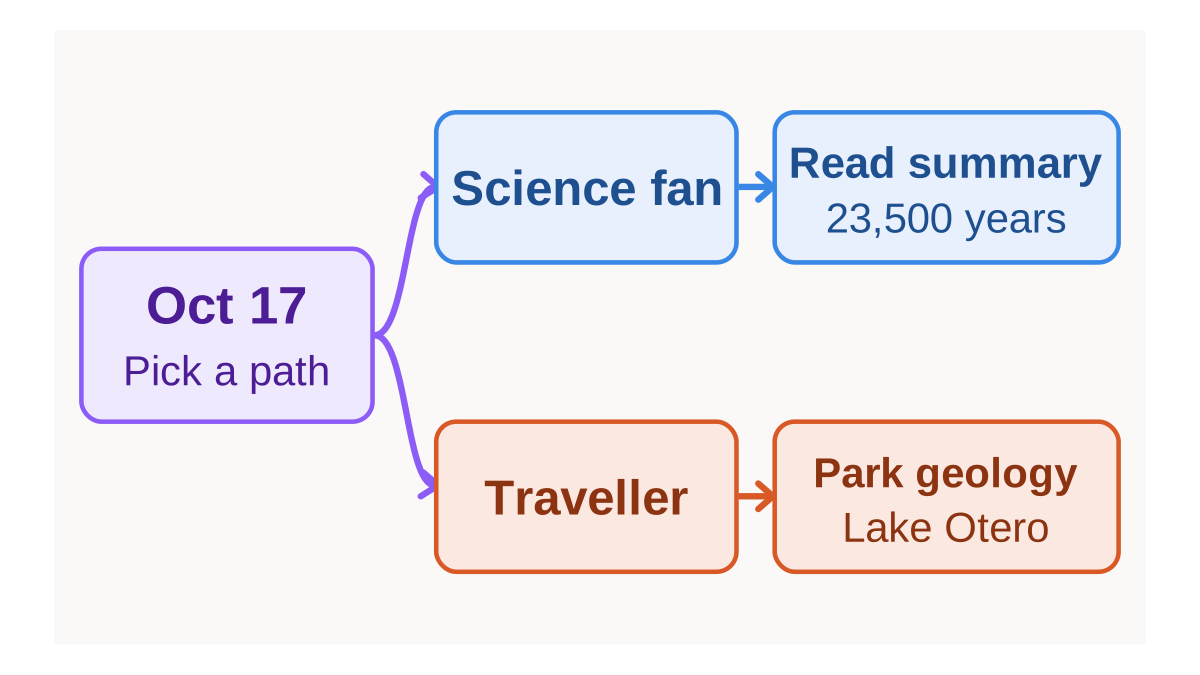
Read the study summary on October 17, science fans; if you are not one, remember the one-liner — people at White Sands watched conifer forests turn to sage and oak within a lifetime (popsci.com).
Travellers planning a White Sands visit should, before they go, read the park’s geology page and keep Lake Otero in mind so the modern dunes make sense as a climate story (theconversation.com).
Its own forecast: By 2026-11-16, at least one major science outlet (Science, Nature, Scientific American, or Popular Science) will publish a follow-up news story or feature that cites the new White Sands 23.5–21.7 ka footprint chronology. — 30% chance by Nov 16, 2026
The footprints were never a still photo. People lived at White Sands for roughly 1,800 years, from about 23,500 to 21,700 years ago, and the new pollen and sediment record shows the surrounding pine forest turned to sagebrush and oak in about a century — within a single human lifetime.
The picture changes from "people arrived in a cold, stable ice-age marsh" to "people adapted in real time as their lake shrank, their trees died, and mammoths, giant sloths, and dire wolves shared a drying plain."
For anyone planning a trip to White Sands National Park, the flat gypsum playa you walk on today was then the muddy shore of a giant Lake Otero that fluctuated for about 1,500 years before vanishing. The dunes trail feels different when you know you are walking on a graveyard of a vanished lake-and-forest world that early humans watched disappear.
Read this Saturday, October 17, visitors — if you are heading to any Southwest park this fall, picture the families who watched their lake die; if not, carry the takeaway that humans have weathered fast climate swings before, and the first Americans were already doing it. The footprints say we have done this before. Carry that, this week, the next time you read about drought or floods.
Its own forecast: White Sands National Park will update its official park website or interpretive materials to reference the October 2026 Springer et al. study by November 16, 2026 — 60% chance by Nov 16, 2026
White Sands was not a fixed Ice Age backdrop: people walked through a landscape changing within a lifetime.
Pollen and sediment point to a shrinking Lake Otero, shifts from conifer forest toward oak and sagebrush, and episodes of severe dryness; the study places the footprints between 23,500 and 21,700 years ago ([University of Arizona](news.arizona.edu); [USGS](usgs.gov)).
For today’s readers, the lesson is that people can live through major environmental change without leaving a complete record of how they responded.
Footprints preserve brief encounters with a place, not a continuous account of daily life; the researchers say they still want to understand how a warming event recorded in Greenland could have contributed to drying in the Southwest ([Popular Science](popsci.com); [University of Arizona](news.arizona.edu)).
Think about your local landscape tonight, October 17: if you have noticed a change in water or plants, write down what changed; if not, take a moment to notice what is there. White Sands shows why observations matter: evidence from the same place can connect human traces with environmental change ([University of Arizona](news.arizona.edu)).

Its own forecast: At least one study author will publicly discuss what could have linked Greenland warming to drying at White Sands. — 35% chance by Nov 16, 2026
White Sands was not a steady cold marsh, it was a place where people watched the world flip fast. A new Science Advances study that pulled up to 75,000 pollen grains per sample pins 152 measured footprints to between 23,500 and 21,700 years ago and finds pine forest turning to pinyon and juniper, and conifer forest to sagebrush and oak steppe, in about 100 years, while Lake Otero surged and shrank for about 1,500 years until it became playa.
For visitors this rewrites what you actually see at the park. Instead of one flat Ice Age lake at around 50 degrees Fahrenheit versus about 60 today, picture a cooler world where water came and went within a lifetime and people left tracks beside mammoths, giant sloths and dire wolves along 20 different horizons.
Visit travelers on Saturday, October 17, 2026, if you have White Sands on your calendar this month save the new 50-year pollen slices for the trail; if not, pull the free Science Advances figures and compare them to today's local drought swings.
Its own forecast: White Sands National Park posts an official interpretive update citing the 23.5-21.7 ka pollen chronology and 100-year vegetation shift — 58% chance by Nov 12, 2026
The picture shifts from a still, empty desert to ground that was moving under people's feet. Pollen and mud taken from the same layers as the tracks show the plants and the climate changed sharply while those walkers were there — the landscape was a work in progress, not a backdrop (popsci.com).
For anyone standing on those dunes today, the point is simple: ancient Americans were living through change, not just sitting in one fixed place.
It matters most for travellers and for anyone following the argument over when people first reached the Americas, since these are among the oldest tracks on the continent. It also gives park guides, teachers and parents a better story than "old footprints in the sand": a climate turning, a marsh drying, people adapting as the ground beneath them became something else.
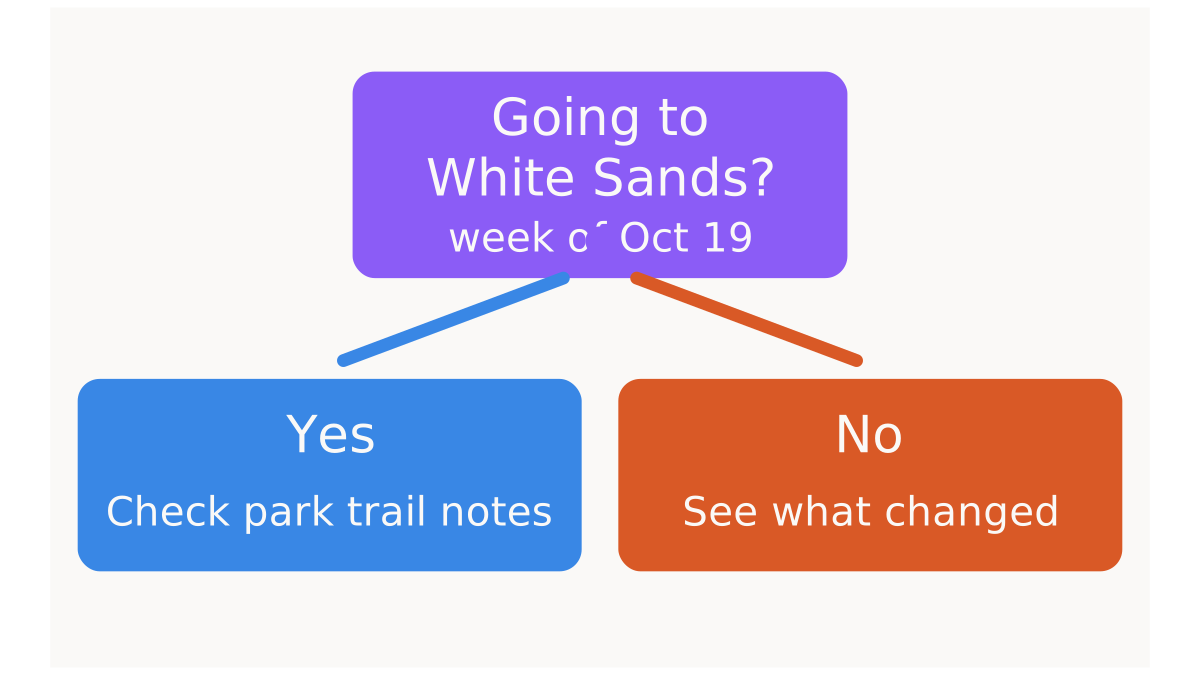
Check the park's own trackway trail notes before your morning walk, travellers booked for the week of October 19, and treat any single age figure as still being tested; if you are only reading along, open the Popular Science piece first and ask which part of the landscape changed fastest — that is the part this new work actually settles. Then let that be your lesson from the day: the desert you photograph is the newest version of very old ground.
Its own forecast: At least one of the Associated Press, Reuters or the BBC publishes its own report on the White Sands pollen-and-sediment study — 70% chance by Nov 10, 2026
This study replaces the old picture of unchanging Ice Age deserts with proof that early humans adapted to sudden shifts in plants and weather right under their feet (popsci.com).
By reading ancient pollen grains and dirt layers — tiny plant dust and mud trapped in the ground — researchers showed that people kept living at White Sands even as their water and trees changed fast (popsci.com). For an ordinary reader, it proves human survival has always depended on adjusting quickly when local nature turns upside down (popsci.com).
For travellers and parents planning a trip to New Mexico, this turns a simple walk on white dunes into a visit to a prehistoric climate classroom (popsci.com).
Teachers and museum guides also get a fresh story to tell, showing students how tiny dust grains unlock the secrets of how ancient families survived harsh weather changes (popsci.com).
Check the White Sands National Park visitor page today, October 17, 2026, if you are a curious reader or traveller planning an autumn trip: if you want to see how the ancient lakebed looks now, book a ranger tour for next week; if not, read the full Popular Science report at home tonight to see the footprint photos (popsci.com).
Compare the white gypsum sand in the pictures with the green wetland described in the pollen study so you can picture both worlds at once (popsci.com).

Its own forecast: Smithsonian Magazine or National Geographic will publish its own article covering this October 2026 White Sands pollen and sediment study. — 65% chance by Nov 10, 2026
This research reveals the first Americans didn’t just wander through a static landscape; they survived rapid climate whiplash. Within a single generation, the lakes around White Sands shrank dramatically, and forests swapped for plains and sagebrush, forcing constant adaptation.
For parents and outdoor groups planning trips, it reshapes how we view resilience. You see that survival in harsh terrain isn’t new—it was a reality for early explorers 23,000 years ago.
Start mapping climate patterns if you care about today’s weather. If you study the past, focus on how humans managed sudden shifts. If not, simply watch local climate headlines closely.
Its own forecast: New climate impact study on White Sands footprint site published — 60% chance by Nov 16, 2026
The White Sands footprint study reveals humans lived through a sudden climate shift 21,000 years ago. Researchers found plant pollen changed dramatically in just decades while people walked there. This shows early humans adapted quickly to rapid environmental change.
People today should see this as proof that climate can shift abruptly, not just slowly. It suggests humans have always faced climate surprises and adapted. This matters for anyone planning long-term for climate risks today.
Read the study today if you care about climate history; check science news if you want updates.
Its own forecast: A follow-up study will confirm exact climate speed — 65% chance by Nov 10, 2026
Two Top 10 lists on this story: the AIs' answers merged into one list, with a reason and a link for each place.
Yes or no? Your forecast first — then we show what 10 AIs forecast.
Will five major news outlets report on these ancient footprints?
Now: 0 reports
We’ll know the answer
Yes — 3 AIsYou are here
🇺🇸Nova🇺🇸Nemotron + Mercury🇨🇳StepFun
Nova: Most outlets will report this major discovery
No — 6 AIsYou are here
🇨🇳DeepSeek🇺🇸ChatGPT🇨🇳MiMo🇺🇸Gemini🇨🇳Kimi🇺🇸Meta
DeepSeek: No big national outlet has its own report yet.
Could not decide (50/50): Z.ai
We check it on: news.google.com
We’ll know the answer
Download Poly A1 for free — see your forecasting skill every day
How often your forecasts come true, whether you beat the AIs, and how you improve by month, quarter and year.


Will Netflix's share price be higher on Wednesday than on Tuesday?
Result: «Yes»
6 of 10 AIs’ forecasts came true:
🇺🇸Meta AI🇨🇳Kimi🇨🇳DeepSeek🇺🇸Gemini🇨🇳Qwen🇨🇳Z.ai
Checked on: finance.yahoo.com
Latest trend →: Messi and Inter Miami play Atlanta United in US soccer league

