This page comes from Investor.gov, an official U.S. government site. It is an introduction to investing, and it starts by saying that investing can help you build wealth for a secure future. The key is to set goals, make a plan, and put money aside for investments again and again over many years.
The page first explains the difference between saving and investing. In both cases you set aside part of what you earn, apart from money for needs and wants. A savings account suits short goals or an emergency fund for surprise costs. You can open one at a bank or credit union, the money is usually federally insured, and most pay some interest. Investing means putting money into things like stocks or bonds, often inside a brokerage or advisory account, hoping to earn a return over time. That return can come from the asset rising in value, or from interest or dividends paid to its owners.
The page says every investment carries risk, so you should expect the market to move up and down. There is no fixed rate of return. Still, some experts see 7 to 10 percent a year as a handy estimate for long-term, diversified investing in U.S. stocks, based on past averages.
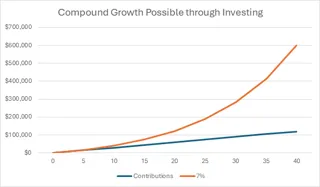
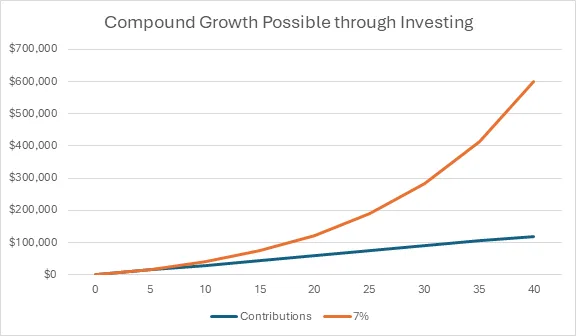
Compound growth is when you earn a return on your money and also on the return that money already earned. The page compares it to a snowball that picks up more snow each time it rolls. A graph on the page shows what happens if you set aside $100 each month for 40 years, assuming a 7% average yearly return. The formula for long-term investing is given as regular investments plus time equals wealth.
Your time horizon is how long you give yourself to reach a goal. If you begin early in your career for retirement, the horizon is long, because you will not touch the money for decades. Regular investing means putting in a set amount, or a set share of your pay. The earlier you start, the stronger compounding gets. It is never too late, but starting later means you must invest more of your pay. When you get a raise, the page suggests raising your contribution too. It also has examples showing the monthly amount needed to reach $500,000 or $1 million, again assuming a 7% yearly return.
Next comes risk. Markets rise and fall, and single investments can lose value, but you can take steps to limit the danger. Know your time horizon and how much risk you can stand. Someone whose retirement is 30 years away has time to ride out swings. Someone who prefers caution should know that too. These things help you pick the right products.
Two main tools for handling risk are asset allocation and diversification. Asset allocation means dividing your money among groups such as stocks, bonds, and cash, based on your risk tolerance and time horizon. Diversification means not putting all your eggs in one basket. If one investment loses money, others may make up for some of it.
The page warns that buying shares of just one company ties your results to that one stock. Its price can be moved by many things, including how well managers do, how strong the products are, customer demand, the economy, labor and supply chain costs, and even the changing tastes of other investors. A wider option is an index fund, which tries to follow a market index, a measure of a basket of stocks and bonds that stands for a market or an economy. When some sectors fall, others may rise, so a diversified investor may break even or even gain. Some products, like target date funds, are built to give this spread.
Long-term investors save for goals many years away, such as college or retirement. Many use accounts offered through work, which usually bring tax advantages. Plans such as a 401(k), 403(b), or 457(b) may lower your taxes. Many employers match what you put in up to a point, so the page urges you to contribute at least that much and not lose free money. You can also open your own Individual Retirement Account, or IRA, which can also cut your taxes. You may use both a work plan and an IRA, but each has yearly limits on contributions.
Once money is in a retirement account, you choose how to invest it. Many people pick a mutual fund or an exchange-traded fund, called an ETF. Target date funds can slowly move to safer choices as your retirement date gets closer. For many people, work plans and IRAs are the base of their portfolio and of their wider financial plan.
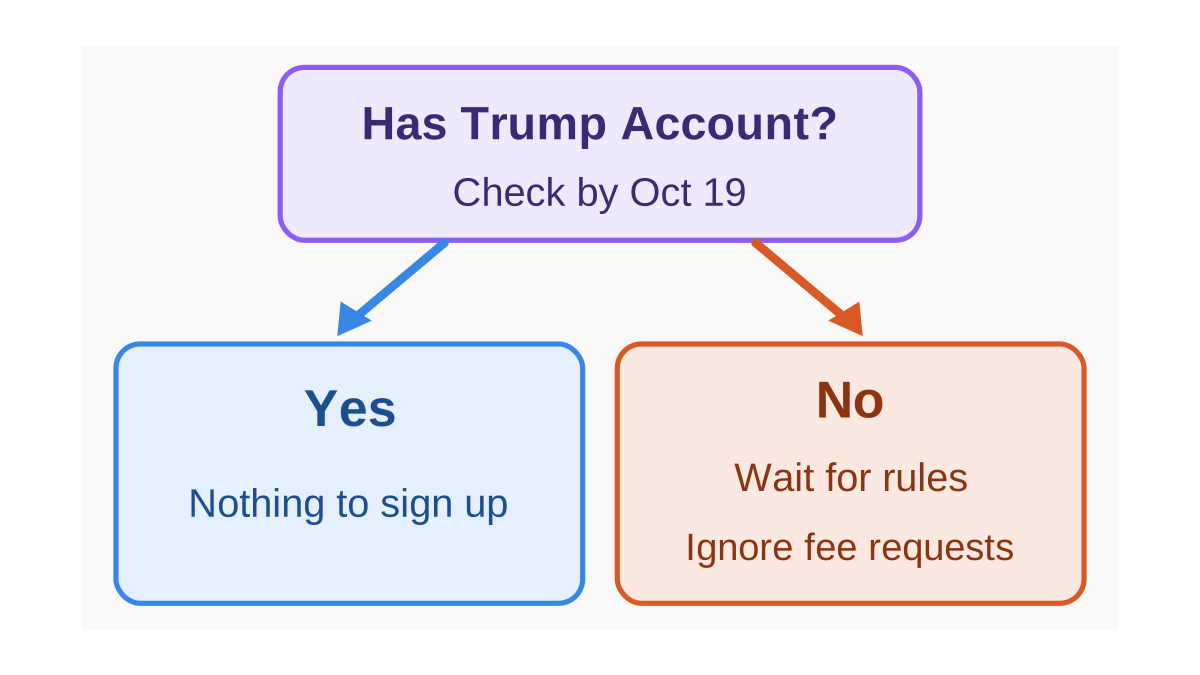
The page lists other long-term accounts: 529 education plans, ABLE accounts for people with qualified disability costs, Health Savings Accounts, and Trump Accounts. It describes the Trump Account, also called 530A, as launching on July 4, 2026. It is a tax-advantaged account for U.S. citizens under 18, held in the child's name, with a parent or guardian as custodian until the child turns 18. A 529 plan is a tax-advantaged way to save for education costs. It is legally called a qualified tuition plan, is run by states, state agencies, or schools, and comes from Section 529 of the Internal Revenue Code. Children can also have custodial IRAs if they have earned income, and parents can open them.
Some goals are closer, like a car, a house down payment soon, or the start-up costs of a small business. For these you may want lower risk and less ups and downs, such as money market funds, certificates of deposit, or investment grade bonds. Money for short goals is usually kept where you can reach it fast, without tax penalties or big fees, for example in high-yield savings accounts or brokerage or advisory accounts.
The page ends with other steps to build wealth. Make a plan or budget by listing income, expenses, savings, and investing, set up automatic contributions, and live within your means. Pay down high-interest debt, since card interest can be far more than you would earn from savings or investments. Build an emergency fund at a bank or credit union so a surprise like a car repair does not push you into debt. Protect your investments, because scammers use many tricks, and learning their red flags helps keep your money safe. For most Americans, a retirement savings plan built over the working years is essential.
Text and photos: investor.gov — original →