La bola negra, also called The Black Ball, is a 2026 drama directed by Javier Calvo and Javier Ambrossi, who wrote it with Alberto Conejero. It is a queer epic based on an unfinished Federico García Lorca work of the same name and on Conejero's play La piedra oscura. The story jumps between 1932, 1937 and 2017 and links three gay men to Lorca's writing. The cast includes Guitarricadelafuente, Miguel Bernardeau, Carlos González, Milo Quifes, Lola Dueñas, Penélope Cruz and Glenn Close.
It is a Movistar Plus original made with Suma Content, El Deseo and Le Pacte. It premiered in the main competition of the 79th Cannes Film Festival on 21 May 2026, and Calvo and Ambrossi won the Best Director Award. Spain's Elastica released it in cinemas on 25 September 2026. France's Le Pacte is set for 16 December 2026. Spain chose it as its entry for Best International Feature Film at the 99th Academy Awards.
In 1932 Granada, a rich young man named Carlos is refused entry to an exclusive club. Members vote against him with a black ball because of rumours that he is gay. His father tells him to deny it and try again. Carlos denies it to the club's committee. A mob then storms the club, and later Carlos climbs a snowy mountain. There he meets the personified Snow, who speaks with the voice of an elderly woman he met earlier. He realises he has died and wasted his life in secret.
In 1937, during the Spanish Civil War, a village trumpeter named Sebastián survives an attack by Italian aircraft that kills his mother. He is forced to join the Nationalist forces. He is told to guard a wounded Republican prisoner, Rafael Rodríguez Rapún, who was once in Lorca's theatre company and was the poet's lover. Sebastián grows close to him and discovers his own desire. Rafael asks him to save a manuscript of Lorca's play from an apartment. Rafael is then taken for execution, and Sebastián is placed in the firing squad that kills him. Sebastián survives the war and finds the manuscript, though he drops a few pages.
In 2017, Alberto, a historian and former playwright, learns that his estranged grandfather has died. The inheritance turns out to be the manuscript of La bola negra. Alberto looks into its origins with the help of a Lorca scholar, Isabelle Durand. He finds that his grandfather was Sebastián, who lived in the countryside with another man while villagers believed they were cousins. Sebastián had quietly followed Alberto's career. Alberto and his mother Teresa decide not to sell the house, and they begin to make peace.
Only 4 pages of Lorca's original work survive. Conejero's play mostly shaped the 1937 story, and the 2017 story draws partly on his own life. Filming began on 26 August 2025 in the abandoned village of Castil de Carrias. It also took place in Comillas, Granada, Sierra Nevada, Sigüenza, Athens and Madrid. A man working as an extra fell down stairs on set in Comillas and later died. The budget was around €15 million. Gris Jordana shot the film on 35mm and treated the three eras the same in processing and colour. The eras are told apart by style and camera movement instead. Calvo and Ambrossi ended their 13-year relationship during the shoot. The cinema cut runs 159 minutes.
Guitarricadelafuente co-wrote and sang the song La nieve. Judeline sang a version of Soldadito español. A 24-song soundtrack came out on Lakeshore Records on 16 October 2026.
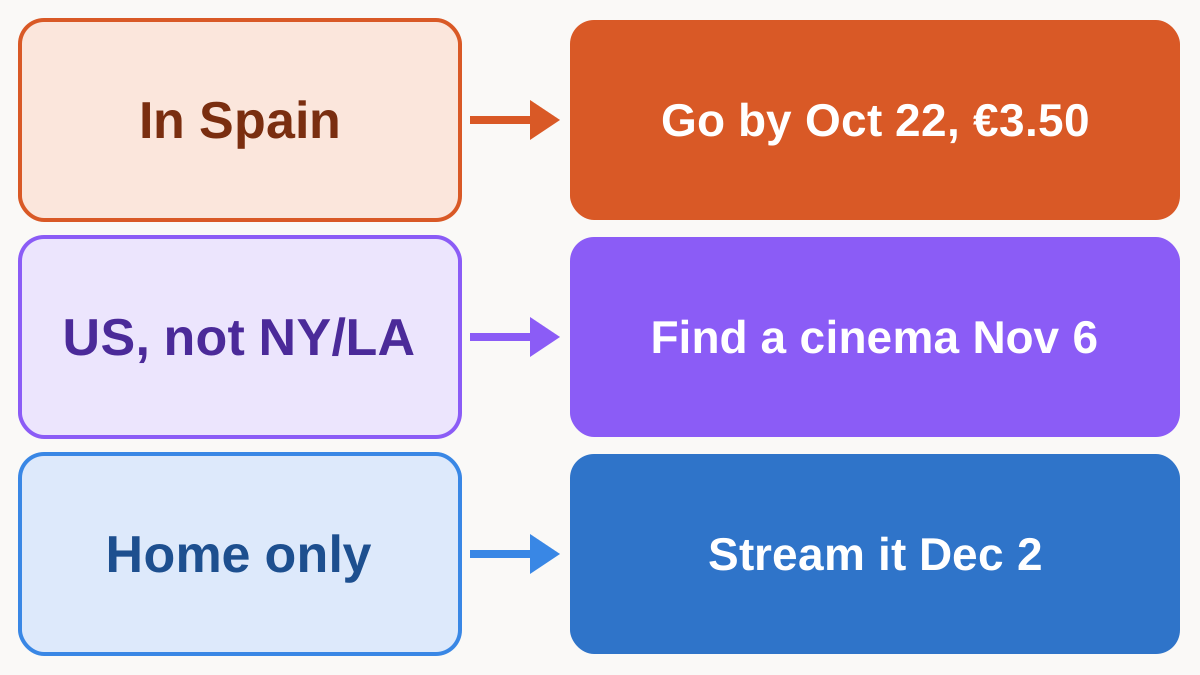
After Cannes, several companies bid for the US rights, including A24, Netflix, Mubi and Neon. Netflix won, in a deal worth around $4–5 million, with a promise of a cinema run and an awards campaign. It first planned a 4-week cinema window from 6 November, then moved the cinema date to 16 October 2026 and streaming to 2 December. That makes a 47-day window, the longest for a Netflix film, beating Marriage Story. In the US, the film made $277,500 in its opening weekend in 4 theatres in Los Angeles and New York. Goodfellas sold it across Europe, Asia, Australia and New Zealand. Release dates include 6 November 2026 in the UK and Ireland and 14 January 2027 in Italy. Brazil gets it on 21 January 2027.
In Spain it did very well. The first Friday brought about €1.32 million and 175,000 admissions. The first weekend made about €4.67 million, the best debut for a Spanish film under a local distributor. By the fourth weekend the total was €29.5 million. As of 19 October 2026, Box Office Mojo showed $26.8 million worldwide.
Critics were mostly positive. Rotten Tomatoes shows 87% positive from 86 reviews, and Metacritic gives 83 out of 100. Praise came from IndieWire, The Guardian, The Hollywood Reporter and RogerEbert.com. Variety called it ambitious but overblown, and Cinemanía gave it 3 out of 5 stars. Slant gave it 2 out of 4. Spain's film academy picked it for the Oscars in September 2026. In October 2026 it made the shortlist of 35 for the 39th European Film Awards.
Text and photos: en.wikipedia.org · 25.09 — original →

Two Spanish filmmakers, Javier Ambrossi and Javier Calvo, are suddenly among the best-known names in world cinema. In Spain they go by Los Javis. Their film "La Bola Negra" was picked for the Cannes Film Festival earlier this year. It mattered a lot to them partly because almost nobody abroad knew them. Ambrossi laughs as he remembers Cannes director Thierry Frémaux telling them he loved the movie and asking who they were.
Five months later, the pair are at the center of the Oscar race. The film is a bold queer epic. It follows three gay men whose lives are linked across a long stretch of history: the early twentieth century, the Spanish Civil War and the present day. It deals with pain passed from one generation to the next and with the legacy of queer people, in a grand and poetic, sad mood.
Cannes loved it. Ambrossi and Calvo shared the festival's best director award with Pawel Pawlikowski, who made "Fatherland." Netflix won a bidding war for the film. It will open in select theaters on Friday and stay there on its own for 46 days, the longest theater run the company has ever given a film. The movie cost $15 million, and people expect it to challenge "The Odyssey" for best picture.
Ambrossi is 42 and Calvo is 35. They went almost directly from a dark editing room to the bright Cannes premiere. With some help from therapy, they have gotten used to their new lives. Ambrossi says viewers keep calling the film poetic. He thinks audiences are not used to that, because movies are meant to please everyone at once. People leave asking why they cried. Calvo says every generation needs a big film that speaks to its wishes and warmth. In his words, people connect to the feeling of "Don't lose your life, just live."
The film opens with a sad trumpet. Sebastián is a musician, played by singer-songwriter Guitarricadelafuente in his first screen role. After his village is bombed, he joins the Nationalist army. There he falls for Rafael, a captured freedom fighter played by Miguel Bernardeau, who is recovering in a military hospital.
That story is only the backbone. Rafael's bond with the real poet Federico García Lorca shows how gay men struggled in a strictly straight military world. It includes saving a work about gay identity, dignity and survival that Lorca began before Nationalist forces killed him in 1936. Calvo says the film honors their grandparents and LGBTQ elders, who fought and died for them. He says they cried on set every day. Ambrossi adds that people have forgotten those elders, though it was not long ago. His grandmother is 90.
The two look more glamorous than most directors. Both started out as actors, and in Spain they are celebrities. They have judged the Spanish version of "RuPaul's Drag Race," sat on game-show panels and hosted award shows. Their films and series have won fans such as Penélope Cruz and Glenn Close, who both act in "La Bola Negra." Master filmmaker Pedro Almodovar is one of its producers.
Calvo and Ambrossi were a couple for years, until they made this film about love. Calvo says every project is a road into the unknown and that it changes you. They broke up romantically as they finished the film and also planned to part ways at work. By the time they reached Cannes, they had changed their minds. Ambrossi says he cannot imagine being a director without Calvo. Calvo notes that the two of them won best director together.
The film broke records in Spain for an independent film. In September it won the People's Choice Award at the Toronto International Film Festival. If American viewers react as strongly, it could bring Netflix its first best-picture win.
Ambrossi says Netflix understood that this is a movie made for theaters, but also that its message can reach people directly. He hopes it could change minds. Viewers often say the film looks far more expensive than it was. Ambrossi credits their teamwork: while one rehearses, the other plans the next day's set design. He says being two makes them big.
Text and photos: boston25news.com · 16.10 — original →
The popcorn is hot and the theaters are full. La bola negra, the film by directors Javier Calvo and Javier Ambrossi, has finally reached American cinemas. That is three weeks after it began in Spain, its home country, and five months after it won the best director prize at Cannes. The directors, the distributor Netflix and their teams all have high hopes. They care about ticket sales, and also about the start of the long awards season. The page calls it the moment of truth.
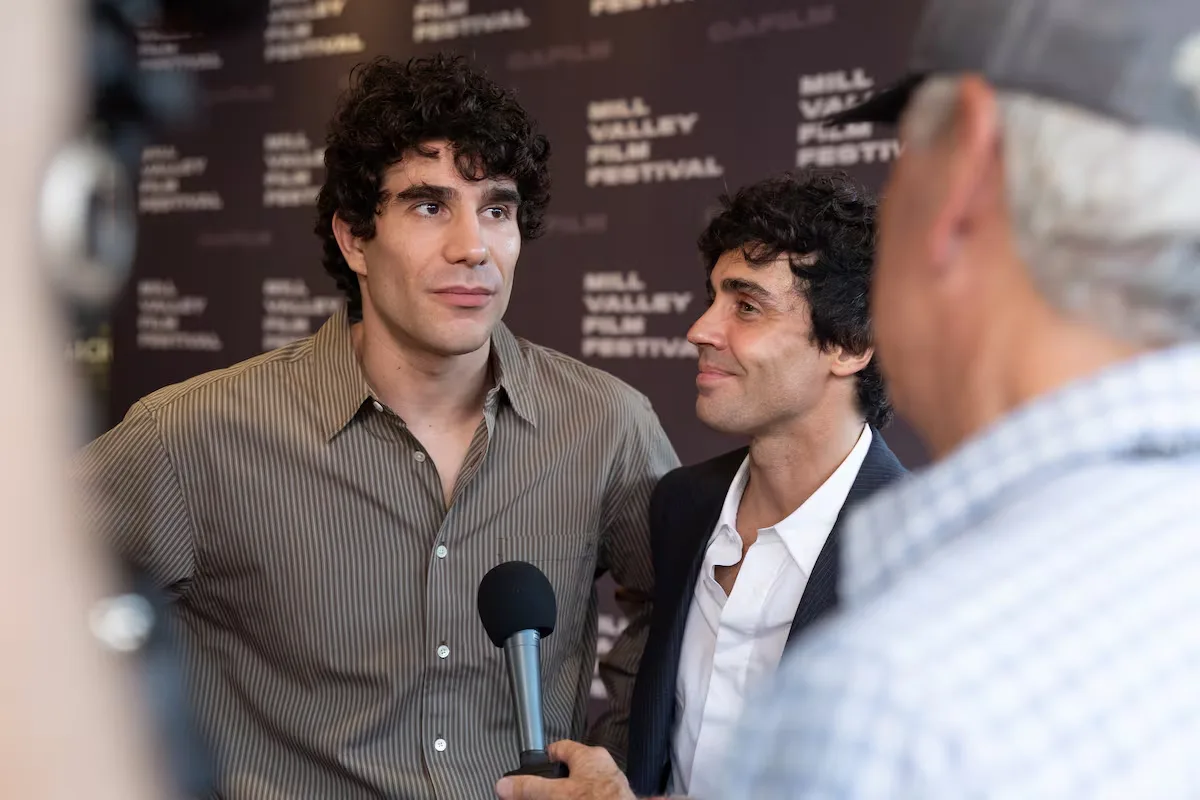
The doors of US cinemas opened for the directors, known as Los Javis, on Friday. In New York, the Paris theater next to Central Park has been advertising the film for weeks. Netflix decided in 2019 to rent that theater for ten years. The film's lead actor, Guitarricadelafuente, who plays Sebastián, is on the cover of Netflix's magazine. He and Miguel Bernardeau, who plays Rafael, also appeared on the cover of Variety, a key industry outlet, this same week. On Thursday the directors showed the film at the city's film festival, to applause. On Friday Glenn Close introduced it at the Paris. There were two more screenings there. The one at a quarter past six in the evening was sold out. The late one, at 22.20, had half the room full.
Los Angeles is the big prize, though. It is the heart of the film business and of the awards machine. Its critics and voters matter for the Oscars, the Golden Globes, the Critics' Choice awards and the actors' guild awards, the Actor Awards. The directors seem to know the way. They are well guided, and they bring charm, stage experience and film knowledge. This first weekend they are giving talks and presentations. On Friday there were more than a dozen screenings in the AMC chain, the biggest in the world. Many were sold out, and several had the directors present.
The six o'clock screening in Century City was the first with a talk by the directors, and no seat was free. The film started at 18.22, after twenty minutes of trailers. The audience was families, couples and friends. There were Spanish speakers, a handful of Spaniards and many curious English speakers. The film is in Spanish with English subtitles. María Martín and her daughter Laura Robb, Spaniards who have lived in Los Angeles for years, waited for popcorn with tissues ready. The daughter said: "Venimos dispuestas a llorar" ["We came ready to cry"]. Afterwards, with red eyes, she was glad the directors came to talk. She said: "Si no, seguiría compungida" ["Otherwise I would still be sad"].
Many people from the film world were in the room, even on day one. Some were seeing it again after festival or expert screenings. One was Van, a man in his thirties from Indonesia, wearing a Los Javis T-shirt in the dizzying front row. He had swapped his tickets to sit close to them. It was his second viewing, and he loved their work since their series Veneno, from 2020. He said: "Creo que esta historia se entenderá aquí, es universal" ["I think this story will be understood here, it is universal"].
Spain chose the film as its candidate for the Oscar for best international film. The first cut will be announced on 15 December, and the final nominations on 21 January. The Oscar ceremony is on 14 March 2027. The Golden Globes come earlier, on 10 January. Six months of campaigning remain, and the directors and cast are already going full speed. In the room there were tears and laughter, and gasps of admiration, for example when Penélope Cruz appeared as a cabaret singer. At nine at night, after the credits, Ambrossi and Calvo came out to loud applause. They spoke in English. They talked about where the film began, which was La piedra oscura by Alberto Conejero. They said Guitarrica's gaze and shyness fascinated them and made him their Sebastián. They spoke of how different Carlos González is from his character Alberto. And they said Milo Quifes convinced them as Carlos with his way of playing Lorca. The audience kept clapping, and the directors thanked them with emotion and took a selfie with the whole room.
Their week is packed. On Saturday the team went to the Academy of Motion Picture Arts gala. They took selfies and photos with Kim Kardashian and Jessica Lange, and danced and sang along to Taylor Swift singing Love Story live. On Sunday afternoon they showed the film at Netflix's main cinema in a private press screening, with a cocktail and a performance by Guitarricadelafuente. Monday and Tuesday are press conferences and dozens of interviews with local and foreign press at Netflix offices, from nine in the morning to five in the afternoon. Netflix is backing the film big. It gave it 47 days in US cinemas, its longest window ever, and huge promotion, including a giant billboard by the Chateau Marmont on Sunset Boulevard.
Critics, publicists and journalists saw the film at festivals such as Cannes, Telluride and Toronto. People at Toronto in September say it gave them goosebumps. That festival is serious and cold, with measured applause. For La bola negra the room kept clapping and standing, which was unheard of, and calmed down only when Calvo and Ambrossi came out. The film won the audience award.
Déborah Laurent, a Belgian cultural journalist in Los Angeles and one of about 400 Golden Globes voters, saw it at Cannes. She said it dazzled her and called it bold and ambitious. She says it must be seen on a big screen, because of the colors, the music and how everything fits. She admits, like other voters, that its storytelling and its explicit nature may be hard for American viewers. She calls it very sensual and more physically and sexually explicit than usual on the big screen. Because she sees people becoming more closed-minded and attitudes going backwards, she thinks it will mainly attract fans of European cinema.
Another voter, from the Mediterranean region, did not want to give a name. She praised how the film weaves three timelines about gay men in different periods of Spanish history. She found the idea of generational trauma striking, with pain and repression of one generation affecting the next. She thought this was valuable in the US, whose context is the opposite of any of the film's timelines.
Journalists also point to curiosity. The Globes voter enjoyed learning about Federico García Lorca and the story behind his unfinished work, which inspired the film. She said it moved her and made her want to learn more about Spanish history and literature.
Voters must keep their votes secret, even from fellow members, and they do. But the general feeling, at a very early stage, is exceptionally good. The directors are within reach of some of the biggest honors in film. They are lifted by Netflix, which might finally win the golden statuette, and by a Hollywood hungry for good stories and new ways to tell them. The Oscar is already eyeing them.
Text and photos: elpais.com · 18.10 — original →