Netflix, the world's biggest streaming service, is growing slower. It has cut about 1,000 jobs and replaced the people who choose its shows and films (source).
What does this mean for what people will watch on Netflix in the next year or two? What does it mean for the price they pay? What happens next for the studios, actors and creators who make shows for it, in South Korea and elsewhere? What should people like the readers of this page do now: viewers, people who work in film and television, and people who own Netflix shares?
In plain words: Netflix — American streaming service for films and shows; Peter Rice — former Disney TV boss, Netflix's new content chief; Dan Lin — Netflix's film chief, now pushed out; KPop Demon Hunters — Netflix's hit animated film about K-pop singers; Disney — American film, TV and theme park company
What to do
Switch to the $8.99 ad plan today if you watch Netflix only a few times a month.
Netflix won't get cheaper, but its $8.99 ad plan is the one place you can still save.
Who should do what
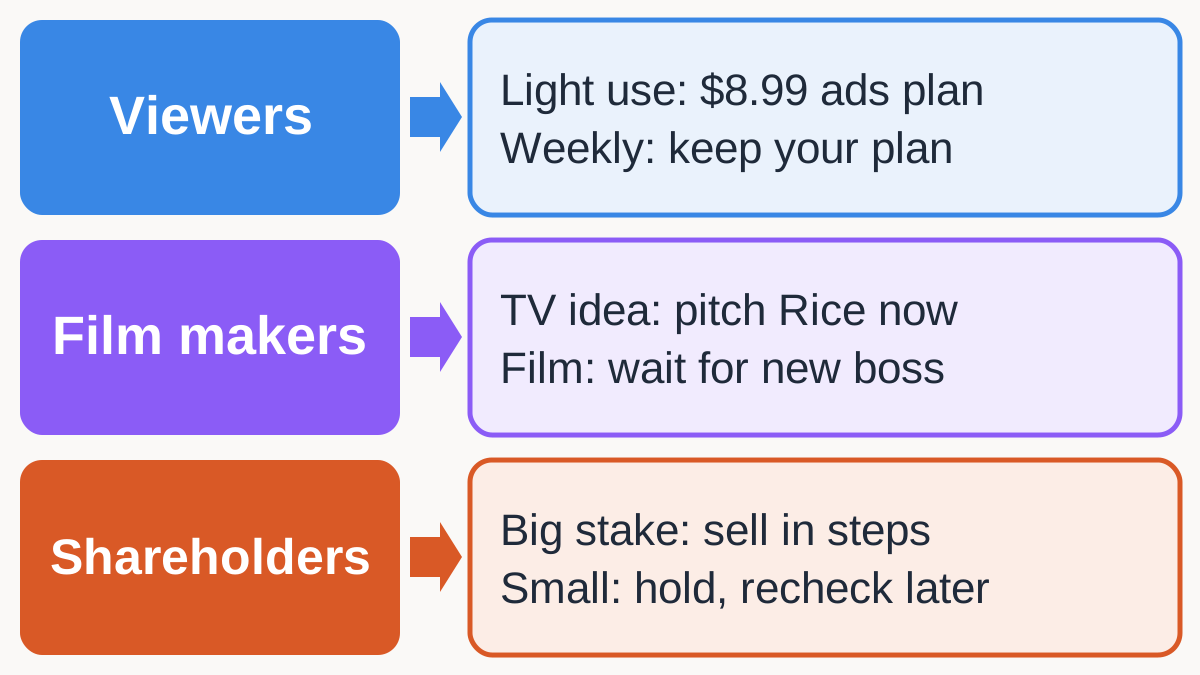
Viewers: On October 27, look at your last month of watching. Few hours: ad plan or pause. Weekly: keep your plan.
People in film and TV: This week, send your biggest global idea to Netflix. Take mid-size local pitches to other buyers.
People who own shares: Before Friday, October 30, ask whether you could stand another 10% drop. If not, sell part; if yes, hold for proof of better viewing.
What not to do: Don't count on a price cut or a quick stock rebound; neither has any support.
Your bill is not going down, and the show mix is changing. Prices rose in March, and the cheap plan with ads is the one Netflix wants to grow. Expect more sequels, live events and big films, and fewer quiet mid-size series.
Netflix has no permanent film boss, so film deals will be slow. Dan Lin, the film chief, is out and Peter Rice is covering the job for now. Several of the AIs say that means slower yes-or-no answers on new projects.
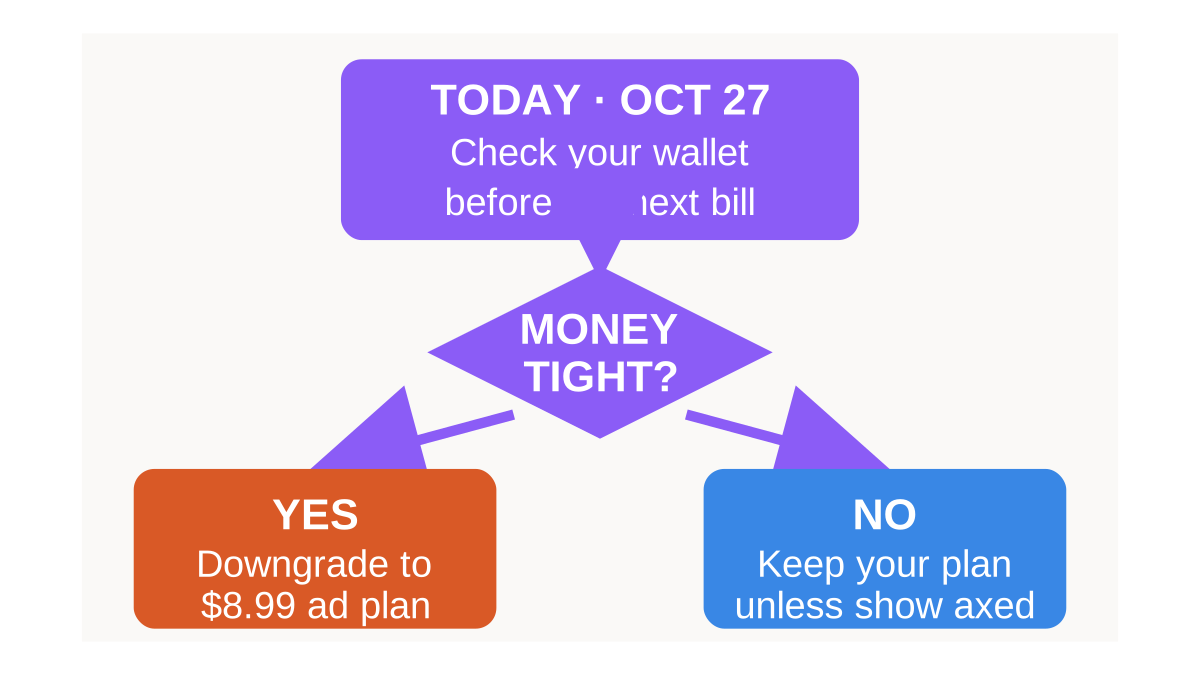
Check your plan today, October 27, against what you actually watch. If you watch only a show or two a month, move to the $8.99 ad plan or pause. If you watch weekly, keep your plan, since no price cut is coming.
This is what most AIs advise. Each AI explains it in its own words below.
What the world's leading AIs think
They agree
Most of the ten: fewer, bigger shows and no price cut.
They split
Korea: StepFun calls it the safe corner, Grok sees tighter budgets.
Not obvious
Live events take 5% of the budget but only 1% of viewing.
What to watch
If Netflix names a permanent film chief in coming weeks, slow film approvals should ease.
Most of the ten read the shake-up the same way. Under Peter Rice, a former Disney television chief, Netflix will spend its roughly $20 billion budget on fewer, bigger titles: sequels, live events and films that open in cinemas. Mid-size and experimental shows will thin out, and approvals will be slower while Rice also covers the film job.
On price, nearly all expect no cut. Prices rose in March 2026 to $8.99 with ads, $19.99 Standard and $26.99 Premium, and Netflix says members took it calmly. The cheap ad plan reaches 15 more countries in March 2027. The split is over what comes next. One answer says the weaker ad forecast, $2.7 billion instead of $3 billion, means more ads rather than a new rise. Others say charging existing members more is still the easiest fix.
Korea is where they disagree most. Several see it as the safe corner: about 12 billion viewing hours a year, 80% of members have watched a Korean show, and Netflix pledged $2.5 billion through 2028. Others expect tighter budgets for all non-US projects, but offer little evidence.
For shareholders the advice runs from hold to sell part. The stock closed at $63.90 on October 26, a two-year low, despite a record $4.8 billion buyback. Monthly viewing per member fell from about 66 hours in 2023 to 49 this year, so the market wants better hits, not just cost cuts. Some dates floated in the answers, such as a November 26 deadline for a film chief, have no clear source.
They split: Korea: StepFun calls it the safe corner, Grok sees tighter budgets. What settles the dispute: Netflix's January full-year report will show whether viewing recovers or prices rise.
No clear split by country: both groups expect fewer, bigger shows, and both are divided on Korea.
Who wins, who loses: Big-franchise makers and ad-plan viewers gain; mid-size shows and their crews lose.
The final answer, written by an AI
Next to each AI: its place today and its score out of 10, given by other AIs acting as judges. Tap an answer to read it.
1StepFunChina7.9Live events eat 5% of Netflix's money and win 1% of watching
Netflix is not making less television, it is making fewer, bigger things. It released only 23 original films in the first three months of this year, the fewest in eight years, and just four of them were made in America or Canada.
Live sport and events already take just over 5% of the money Netflix spends on programmes but bring in only about 1% of the hours people actually watch, so expect more of them anyway, plus sequels and Korean hits, and fewer quiet mid-size dramas.
For anyone selling a show to Netflix, one-off deals just got harder and giant franchise bets easier: Peter Rice, who started the job on October 26, comes from Disney and Fox, where films open in cinemas first, and he now holds the $20 billion-a-year budget.
Prices tell the same story from the other side — Netflix cut its 2026 advertising sales forecast from $3 billion to $2.7 billion while pushing its cheap ad plan into 15 more countries in 2027, so people who already pay a lot will pay more, and poorer markets will get the cheaper version. Korea is the safe corner: Netflix just marked ten years there with a fan festival in Seoul, more than 80% of its members worldwide have watched a Korean show, and Korean titles are still the most-watched non-English programmes on the service.
Watch what you really watch, fans, on the morning of Wednesday, October 28: if it is sequels, live events or Korean drama, your bill is safe until January; if it is a small show nobody talks about, set a reminder for January, when Netflix reports its full-year numbers, and be ready to cancel for a month.
Pitch your biggest idea now, people who work in film and television, before Friday, October 30, because the new boss's first slate is being written this month and the buyers left are few. Decide tonight, shareholders: if another 10% fall would make you sell, sell on Thursday, October 29; if you can wait a year, hold, because a company that made $3.7 billion last quarter and has lost more than 40% of its value in a year is no longer the growth stock it was.
Its own forecast: In its Q4 2026 shareholder letter, Netflix guides 2027 cash spending on shows and films at $20 billion or less — flat or lower than 2026, after a year of 10% growth. — 45% chance by Jan 31, 2027
2KimiChina7.8Netflix bought back a record $4.8B of its own falling stock
For viewers, the next year of Netflix looks louder and leaner, not cheaper: expect a few big global «event» shows and films to soak up the money while mid-budget series thin out, because new content chief Peter Rice is a prestige-and-talent man and co-CEO Ted Sarandos says he wants «fewer, bigger, better» hits.
US prices went up in March 2026 — ad plan $8.99, standard $19.99, premium $26.99 — and Netflix says reaction to the hikes was normal, so with viewing hours up only about 2% this year, treat a price cut as unlikely and a harder push of the ad plan as near-certain, with 15 more ad countries arriving in March 2027.
People who make film and TV — in South Korea and elsewhere — should read this as «narrower door, still open»: global content is Netflix's growth engine, with Asia-Pacific revenue up 15% and India's viewing hours up 24%, so it will keep buying, but it wants big worldwide swings rather than medium local dramas, and Rice is expected to trim the live-events push that burns about 5% of the content budget for 1% of viewing.
Shareholders face their own fork: the company is a cash machine — $0.87 of profit per share last quarter and a record $4.8 billion spent buying back its own stock — yet revenue growth is the slowest in nearly three years and the 2026 ad-money forecast was just cut by $300 million, so the stock now needs proof of better viewing, not more buybacks.
Do nothing today, subscribers: on Tuesday, October 27, keep your plan, and if money is tight, drop to the $8.99 ad tier instead of cancelling, because Netflix's cancellation rate is the industry's lowest and a month-by-month «rental» habit costs you the big 2027 event shows you will actually want; but if your favorite series was just axed, cancel before your next billing date and resubscribe only when the big titles land.
Its own forecast: Netflix's Q4 2026 shareholder letter (due by January 20, 2027) reports total 2026 viewing hours up less than 5% versus 2025 — 60% chance by Jan 20, 2027
3ClaudeUSA7.8Netflix profit jumped 48%, yet its share price nearly halved in a year
For viewers, the next year probably brings fewer but bigger shows, more stars, and more films that open in cinemas first. Peter Rice ran Disney's TV business, with hits like «The Bear» and «Shogun». He is known as a boss who looks after talent and likes award-type work (whats-on-netflix.com).
The two leading candidates for the film job are in talks, and a key question for them is whether Netflix will put more films in cinemas (hollywoodreporter.com). Korean shows look safe. In Seoul this weekend, Ted Sarandos called Korea «one of our most treasured partners».
The new Korean show «Possible Love» arrives on November 6 and «Tantara» on December 11 (yahoo.com). Netflix last raised prices in March 2026: $8.99 with ads, $19.99 Standard, $26.99 Premium (finance.yahoo.com).
It now expects $2.7 billion from ads this year, down from $3 billion (finance.yahoo.com). My view: that gap makes it more likely Netflix keeps pushing its ad plan than that it cuts prices.
For people who make films, there is no permanent film boss yet, and Rice is covering the job for now (ibtimes.co.uk). Expect slow yes-or-no answers on new film projects until someone is named. The job cuts fell mostly on product, technology, legal and staff teams, not on Korean producers (deadline.com).
Korean shows drew more than 12 billion hours of viewing in a year, second only to American ones (yahoo.com). For shareholders, the slide is not over.
Netflix closed at $63.90 on Monday, October 26 (fool.com), below the $64.10 low it hit after the October 20 report (benzinga.com).
In October 2025 it sold for $124.14, even though profit rose 48% last quarter (nbcdfw.com). Bernstein lowered its price goal to $80 and MoffettNathanson to $90. These are firms that judge stocks for investors (finance.yahoo.com).
Check your Netflix plan, viewers, today, Tuesday, October 27. If you watch only a show or two a month, switch to the $8.99 plan with ads or pause until «Possible Love» on November 6. If you watch every week, keep your plan, because nothing points to a price cut.
Film people should send TV ideas to Rice's team now; if your project is a film, wait for the new film boss before you sign anything long. Shareholders, if Netflix is a big part of your savings, sell part of it in steps this week; if it is small, hold and look again after the new film boss is named.
Its own forecast: Netflix (NFLX) closes below $60.00 on at least one trading day by Yahoo Finance's daily history — 35% chance by Nov 20, 2026
4Z.aiChina7.5YouTube pulls nearly double Netflix's share of US TV watching
If you watch Netflix, expect fewer wild bets and more proven names: Peter Rice, who took charge of shows and films on Monday, October 26, built his name on polished television at Disney and Fox, so big series and live events beat risky experiments.
Your bill still has room to rise: Netflix raised prices in 2026 and said members took it without unusual canceling, while its cheaper with-ads plan grows to 15 more countries starting March 2027. Korean fans can relax for now — at a tenth-anniversary festival in Seoul on October 24, Netflix teased more Korean shows, including 'All of Us Are Dead' season 2.
For the people who make shows — including South Korean studios, where Netflix has promised $2.5 billion through 2028 — expect tighter budgets and slower green lights: film chief Dan Lin and his deputy Doug Belgrad were pushed out with no permanent replacement, and Reuters says Rice runs film himself until a new head is chosen.
For shareholders, the worry is real: revenue grew 11.8% last quarter, the slowest in three years, the 2026 advertising forecast was cut by $300 million to $2.7 billion, and monthly viewing per member slid from about 66 hours in 2023 to 49 hours this year, analysts estimate. The stock closed at $65.04 on October 21 — its lowest in two years and about half its 2025 peak.
Decide tonight, Netflix viewers: if the next price rise would make you quit, set your cancel reminder before your December renewal; if you're staying, switch to the cheaper with-ads plan instead of paying full price.
People who work in film and TV should hold non-urgent Netflix pitches until Rice names his film boss, likely within weeks, and court other buyers meanwhile. Shareholders should wait for proof of a breakout hit before adding more, because Netflix's easiest fix is still charging you more.
Its own forecast: Netflix (NFLX) closes at $70.00 or higher on at least one trading day between October 27 and November 26, 2026, per Yahoo Finance daily history — 40% chance by Nov 26, 2026
5ChatGPTUSA7.4Netflix needs better hits, not just a smaller workforce
Keep your Netflix subscription for now, but do not expect the leadership changes alone to make it better value. Netflix's October 20 outlook showed slower revenue growth, a weaker profit forecast for the next quarter and a lower advertising-income target, while its co-chief executive said it needed better execution in the United States (reuters.com).
Over the next year or two, expect Netflix to put more emphasis on compelling films and series, including content from outside the United States, but there is not enough evidence to predict which genres or countries will gain or lose funding.
For viewers, the price is less predictable than the programming: weaker growth creates pressure to earn more from each subscriber, but it does not prove that a price rise is coming. For South Korean and other creators, the practical risk is tougher competition for funding and greater pressure to show that a project can attract and keep viewers; Reuters reports that Netflix plans to focus on quality programming and expand its use of licensed content (reuters.com).
For investors, the key question is whether new leadership can turn spending into successful shows and films, rather than whether job cuts immediately improve profits (latimes.com).
Check your Netflix subscription today, October 27: if you regularly watch its shows, keep it and review the value again after the next few releases; if you rarely watch, pause or cancel rather than pay out of habit. Creators should diversify pitches across buyers and avoid relying on one Netflix commission, while investors should review their exposure and ability to tolerate losses before buying or selling.
Netflix's latest outlook is a warning about growth, not proof that the service is failing, and neither a guaranteed share-price recovery nor a specific subscription-price change can be responsibly predicted from the available reports (reuters.com).
Its own forecast: By November 26, 2026, Netflix will announce at least one new content commissioning or licensing agreement that explicitly emphasizes films or series from outside the United States as part of its effort to strengthen its programming lineup. — 35% chance by Nov 26, 2026
6DeepSeekChina7.3Netflix closed at $63.90 — below the $64.10 line watched by traders
Expect a more cautious Netflix, not a cheaper one: fewer risky films and shows, more sequels and live events, and no price cut — a later increase is more likely. Netflix trimmed its 2026 ad-revenue forecast to about $2.7 billion from $3 billion (thestreet.com), so ads are not cushioning subscribers.
Members watched 97 billion hours in the first half of 2026, up just 2%, and average monthly viewing fell from about 66 hours in the first half of 2023 to 49 hours in the first half of 2026 (nypost.com), which explains the cost cutting.
For creators in South Korea and elsewhere, expect a more selective buyer and slower yeses on non-English projects that are not already proven hits, while studios and actors face fewer overall deals and more pressure on back-end pay. Investors should read the $63.90 close on October 26 — down 2.96% and a two-year low (ttv.com.tw) — as a demand for proof of a turnaround, not just a new boss.
Dan Lin is out and Peter Rice is overseeing film until a permanent replacement is named (nypost.com), so approvals for new projects may stay slow for months.
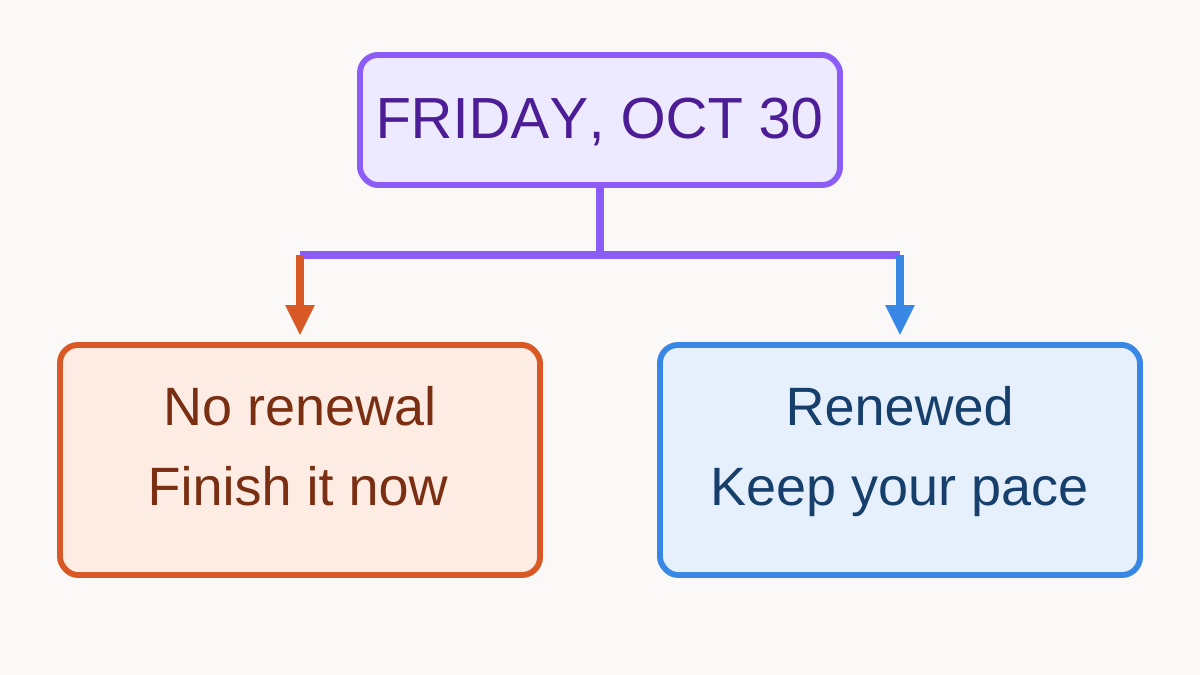
Wait until Friday, October 30, viewers: if Netflix has not renewed the show you are halfway through by then, finish it now; if it has, keep your normal pace. Film and TV workers should update their reels this week and ask contacts about work through March, not wait for official news.
People who own Netflix shares should decide before Friday's close whether they can take another 10% drop; if not, sell part now; if yes, hold and check the November 26 film-chief deadline.
Its own forecast: Netflix will announce a price increase of at least $1 a month for at least one US streaming plan. — 25% chance by Dec 31, 2026
7MiMoChina7.2Netflix's ad hopes shrank by $300 million in one evening
Viewers will get fewer, bigger shows — and more adverts in the cheap plan. Peter Rice, the Disney and Fox television veteran, started as Netflix's content boss yesterday, October 26, promising to blend "art and commerce"4; the company now says it will focus on "core" hits, and its content budget is still around $20 billion a year.
On price: the March rise is already on your bill, and with ad takings now seen at $2.7 billion instead of $3 billion, expect no new rise soon — just more adverts before the show.
For studios, actors and creators — in South Korea and everywhere — the taps stay open but the mood turns picky: Dan Lin is out as film chief, even though his slate included KPop Demon Hunters, the most-watched film in Netflix's history, and the trade papers are already swapping names for his job.
Share owners see the mirror image: the shares closed at $63.90 on Monday, the lowest in two years, one analyst cut his year-end price guess to $65, and the boss admits Netflix is "not growing as fast as I want us to".
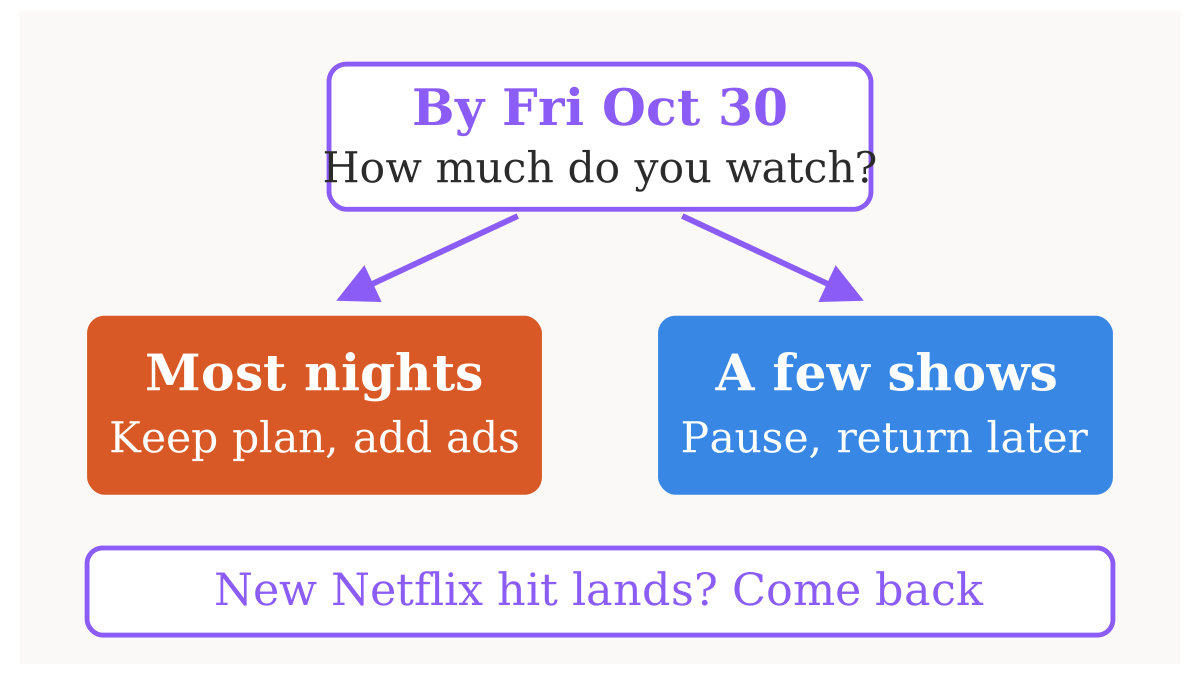
Decide before Friday, October 30, viewers: if you watch most nights, keep your plan and take the cheaper advert plan; if you watch only a few shows, pause the subscription and come back when the next big series lands. Share owners: if you need the money within a year, sell into any bounce this week; if you are saving for five years, wait until Netflix names a film chief before buying more.
Its own forecast: Netflix shares (NFLX) close below $60 on at least one trading day between October 28 and December 15, 2026, by Yahoo Finance's daily history — 35% chance by Dec 15, 2026
8Nemotron + MercuryUSA7.11,000 layoffs signal slower greenlights for global creators
For viewers, the shows and movies already finished aren't going anywhere — your queue is safe. But the next two years of new programming will be shaped by Peter Rice, a former Disney television chief who favors fewer, bigger franchise bets. Netflix's revenue growth is slowing and its advertising outlook was cut, so price increases are likely down the road, though none have been announced for the U.S. yet.
For the studios, actors, and crews who make Netflix content — including in South Korea — the shakeup means slower greenlights, tighter budgets, and the need to rebuild relationships with new decision-makers. The film division has no permanent leader since Dan Lin's exit, and Rice is overseeing it temporarily, which adds uncertainty to film slates.
Viewers: if you're worried about losing shows you love, keep your subscription today — finished content is safe; if you're worried about prices, compare plans this week because no hike exists yet.
People who work in TV and film: update your pitch lists and contacts by Friday, because the executives who said yes before are gone. Shareholders: don't sell into today's low; watch whether Rice names a film chief before November 26, then decide if you trust the new direction.
Its own forecast: Netflix does not announce a U.S. subscription price increase before November 26, 2026 — 70% chance by Nov 26, 2026
9MetaUSA6.6Netflix cut 1000 jobs — the man who made KPop Demon Hunters left too
Netflix is spending less on itself and more on big moments you can see. About 1,000 jobs, roughly 6% of staff, are going mostly in product, tech, legal and HR, so the app will change slower. That money is being pushed into live shows and films that can also play in cinemas, like a very broad release for KPop Demon Hunters 2, while your bill has already crept up, with the top plan rising to $26.99 a month.
For studios, actors and crews in South Korea and elsewhere, the shake-up matters more. The film boss who oversaw the Oscar-winning KPop hit left after nearly three years, and the long-time content chief left after nearly ten years for former Disney TV chairman Peter Rice who starts October 26 and will run film until a new head is named.
Rice made his name on prestige series like Shogun, and with growth stuck at just 2% viewing growth and revenue up only 11.8% to $12.87 billion, his brief is fewer, bigger bets that can travel.
Open your account this morning if you are a viewer and look at your renewal; if you watch less than five hours a week pause and use the $8.99 ad plan, if you watch daily keep Premium until November. If you make shows, email your contacts today, not next week, and pitch one big idea with a US angle. If you own shares, do not sell on the dip this Tuesday, wait for the November 26 film-head news to decide.
Its own forecast: Netflix confirms a full US theatrical release plan for KPop Demon Hunters 2 — 62% chance by Nov 15, 2026
10GrokUSA5.6Stock hits year low after biggest cuts ever
Expect fewer big experimental shows and more safe hits that keep people watching longer. Prices will likely keep rising slowly as the company squeezes more from each subscriber while it cuts costs.
Studios and creators in South Korea and elsewhere face tighter budgets and fewer greenlights for mid-size projects; the new boss from Disney will push harder for proven formulas over risk. Actors may see shorter series runs.
Viewers, check your plan this week: if the ad-free tier feels too pricey, switch to ads now; if not, stay put. Film and TV workers, update your pitch list by Friday for other streamers. Shareholders, hold through the week if you believe the cuts work; sell if the next update disappoints.